Where the whole thing started. Five years of work in one family garden, from a first season of learning to grow food to an established food forest that feeds a household.
A cool-temperate landscaping project: deciduous stone fruits set out for winter chill and summer light, underplanted with flowering beds that carry pollinators through the whole season.
The same view, before and after
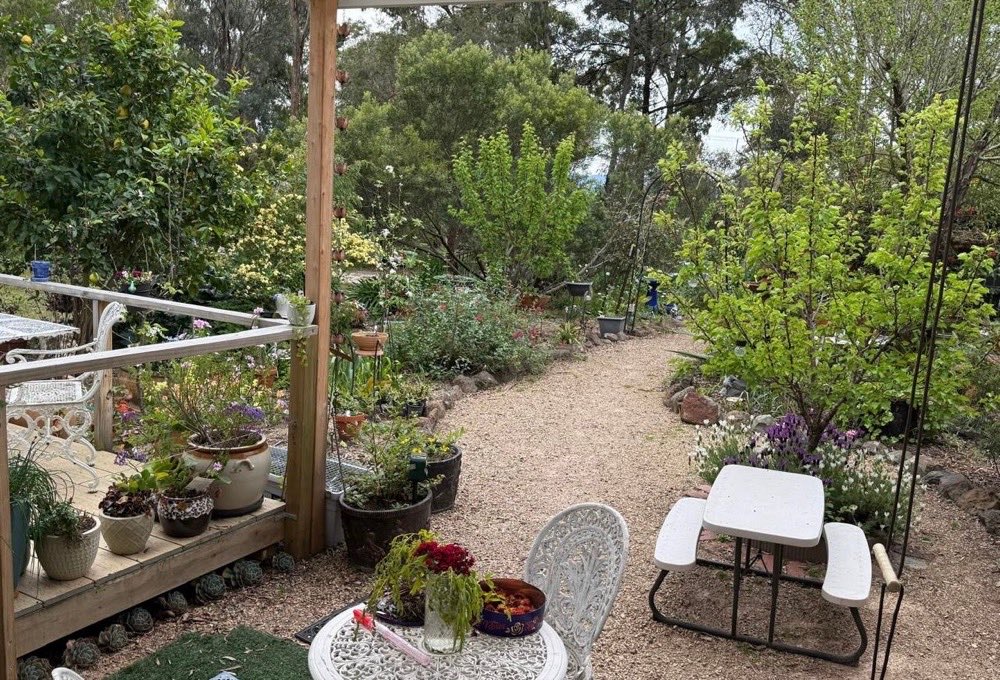
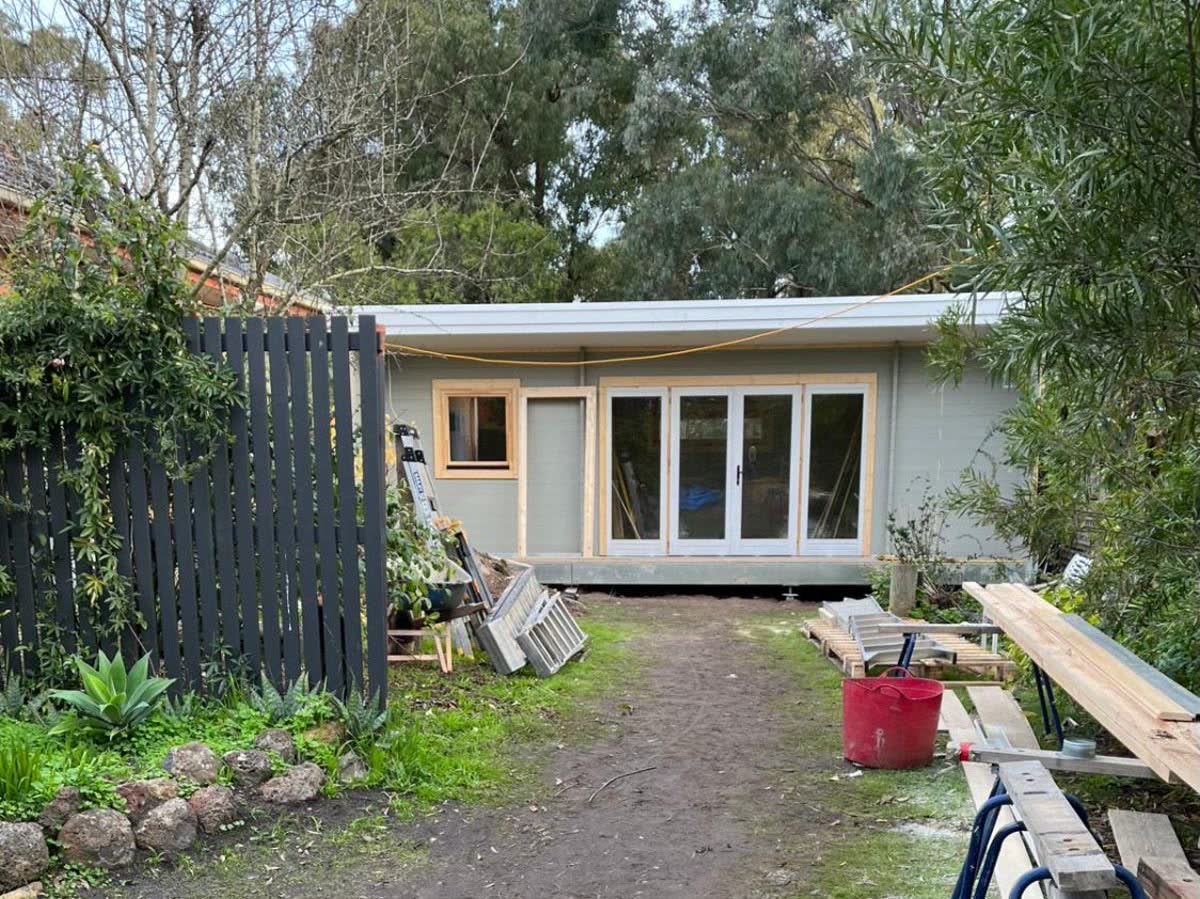
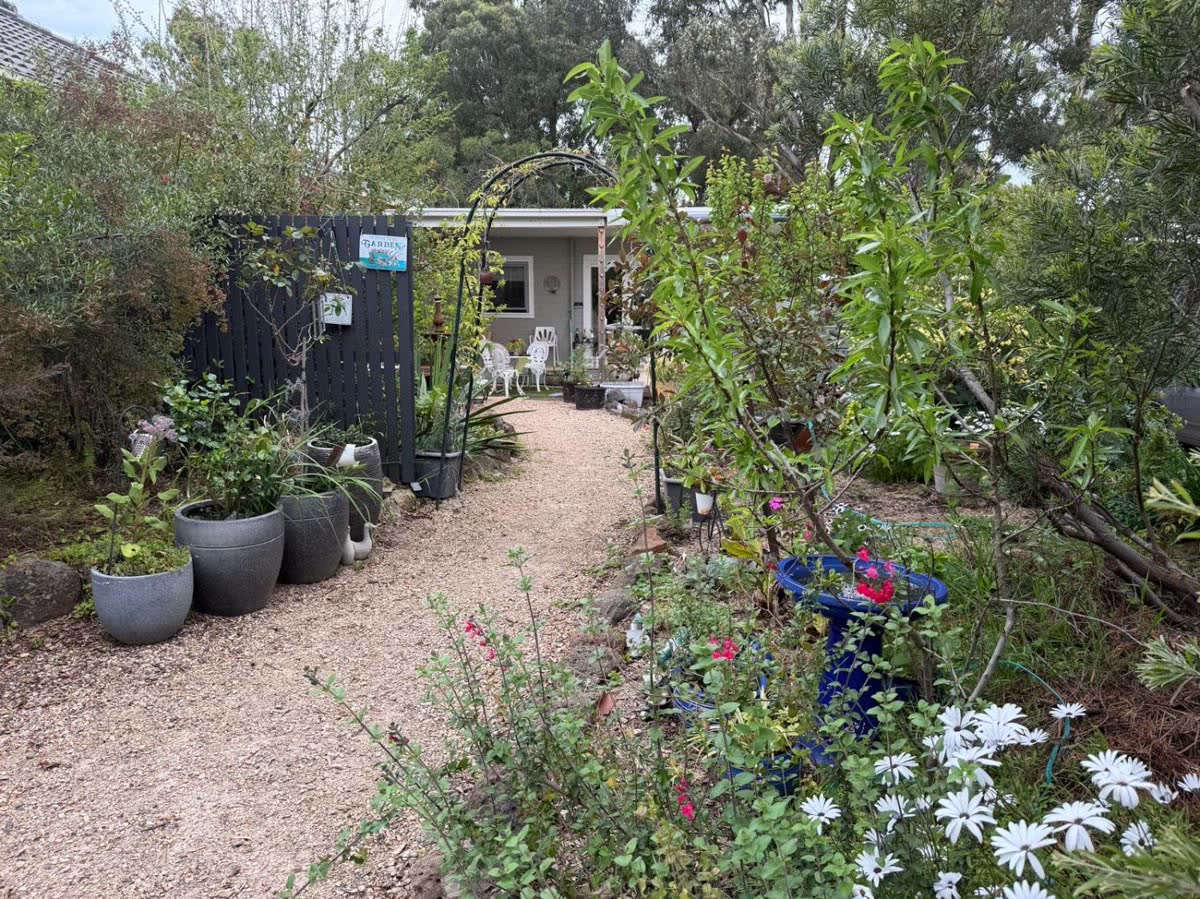
BeforeBare ground and building materials, the studio newly up.AfterThe same view: gravel path, an archway, and the beds grown in around it.
4 entries, newest first.
Working visit
Opening up the grapefruit
The food forest around the granny flat is about three years old now and has carried on developing as a productive, diverse, well-used family garden.
This visit covered the food forest, the central roundabout and mini-golf area, the family vegetable garden, the bike-track plantings and the fruit trees toward the rear of the property. Fruit trees are distributed right through: mulberry (Morus spp.), lemon (Citrus × limon), lime (Citrus spp.), orange (Citrus × sinensis), and a nectarine (Prunus persica var. nucipersica) my grandfather planted, which has regenerated strongly after an earlier heavy prune.
The paths and planted areas show several years of development. Crushed rock makes durable paths, and many cubic metres of mushroom compost and woodchip mulch have built the soil and held moisture through dry periods.
The family vegetable garden is cared for collectively and runs on the Three Sisters method: corn (Zea mays), beans (Phaseolus spp.) and pumpkins (Cucurbita spp.). The pumpkins did particularly well last season and the combination is going in again.
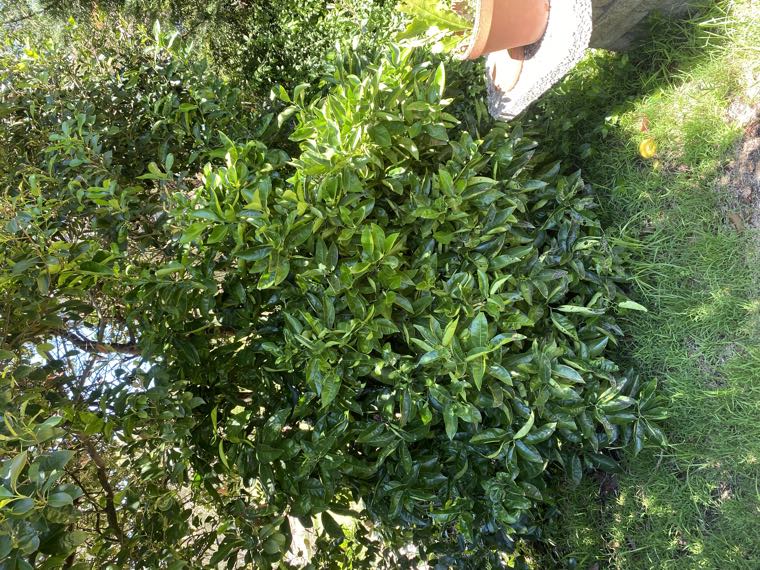
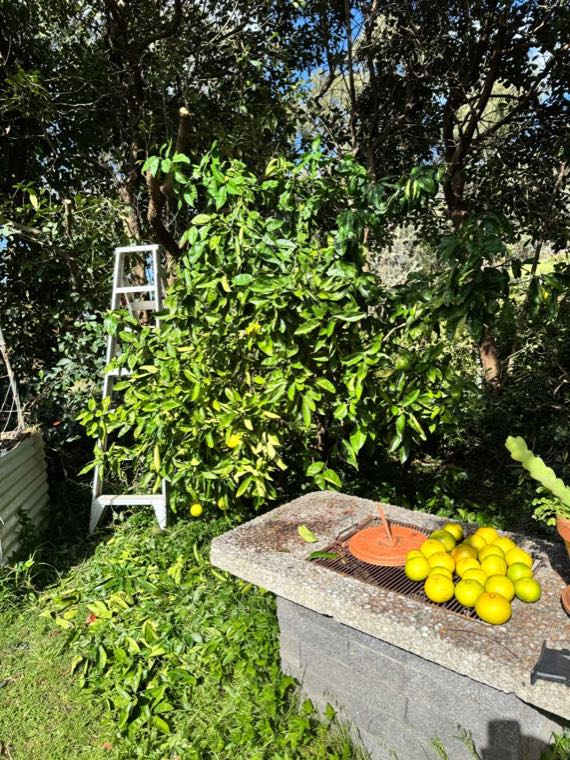
The work on the day was a heavy prune around the grapefruit (Citrus × paradisi), opening it up to more light and growing space, and preparing the vegetable garden for the coming Three Sisters planting.
The grapefruit, before and after
16 Jan 2024Closed over, with very little light reaching the middle of the tree.After the pruneOpened up: prunings on the ground, fruit off, light into the canopy.
What happens next
Review the trees earmarked for removal and confirm the work before cutting begins.
Keep and process suitable cut material for mulch, then spread it where cover is thin.
Plant a pomegranate (Punica granatum) in a sunny, well-drained position.
Return visit
Worms, mulch and dried bananas
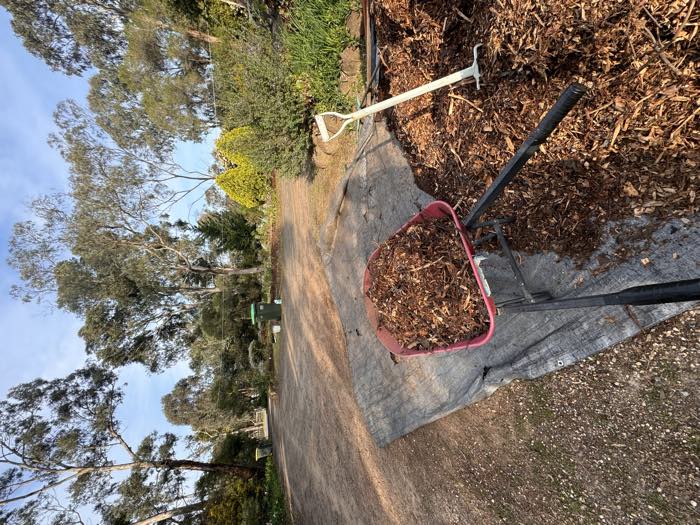
A short return stay between runs. I spread another few cubic metres of mulch across the garden, continuing the soil-cover and moisture work from the long stay earlier in the year.
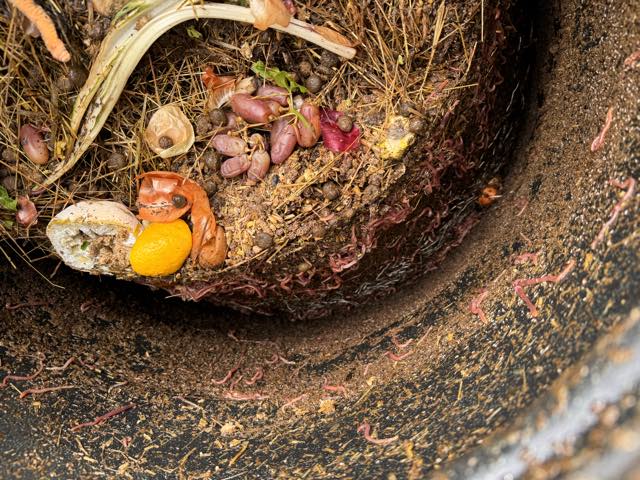
Turning the worm farm, I found a very healthy and active population of composting worms, which told me the system was working and processing its material properly.
I also made herbal tinctures during the visit, and went along to the local market a couple of times to sell dried bananas (Musa spp.) produced up at the banana farm in Queensland. One of those weeks where the whole route connects up.
The return stay
28 Sep 2024Another few cubic metres going out, a barrow at a time.30 Sep 2024The worm farm turned over, and working: a dense population through the scraps.
What happens next
Keep feeding the worm farm without disturbing a healthy population unnecessarily.
Establishment
The framework goes in
A continuous stay of just over two months, spent building the physical framework of the food forest around the granny flat.
I spread many cubic metres of mulch and mushroom compost to build organic matter, improve soil condition and help the garden hold moisture. Existing fruit trees across the property were mulched, and many more fruit trees went in as the food forest expanded.
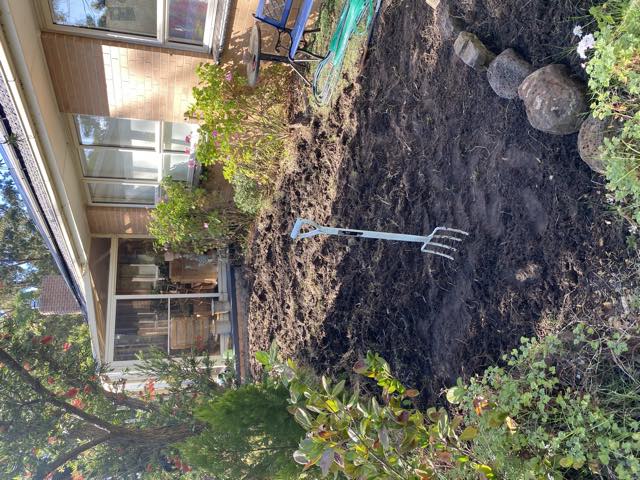
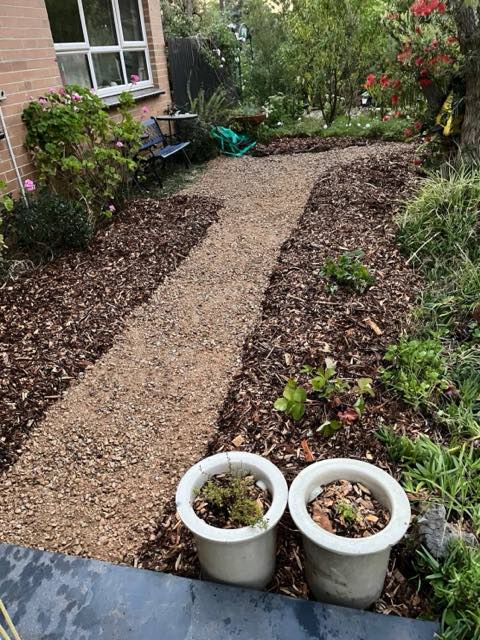
A good deal of the work was landscaping. I formed gravel pathways, established rock edges, and dug new garden areas with defined edging. Together those gave the garden clearer structure, better access, and more space to plant into.
Starting out, December to January
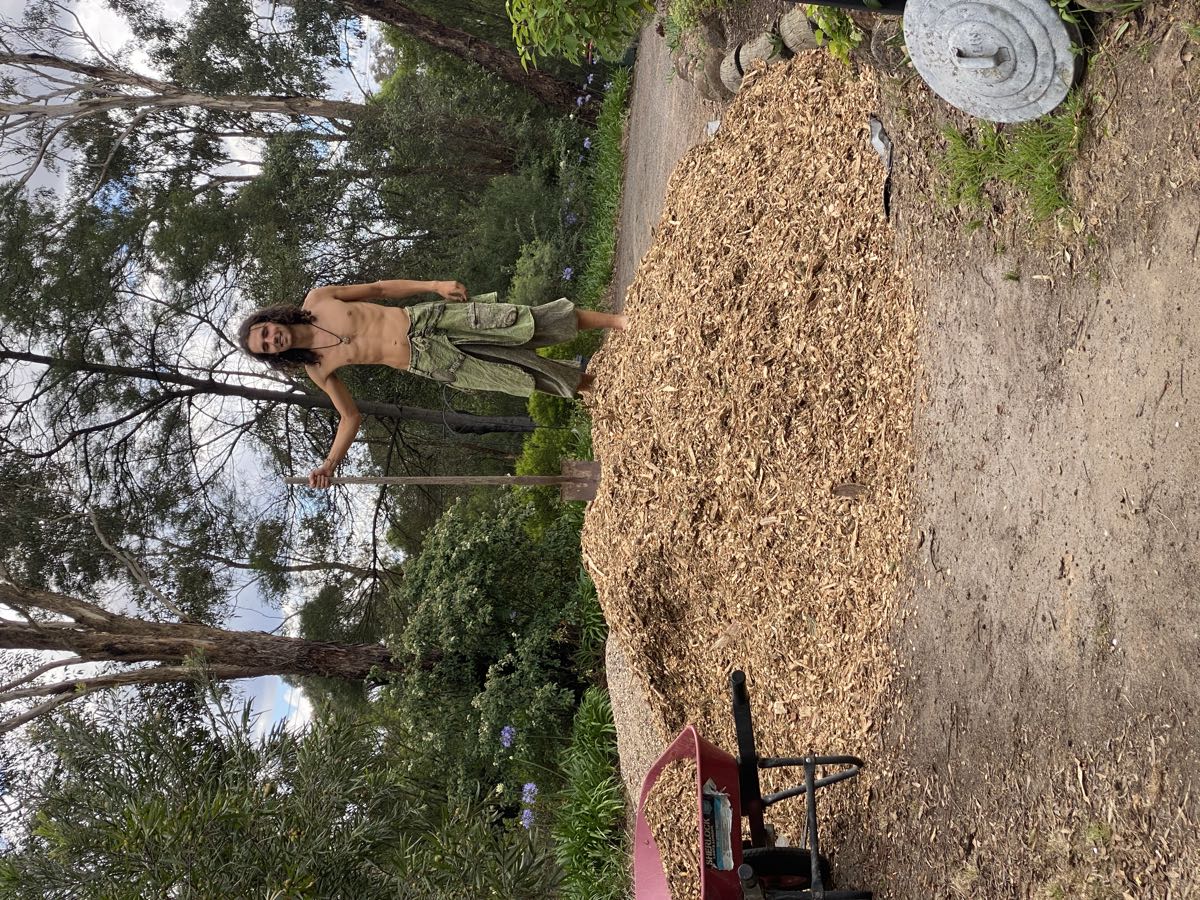
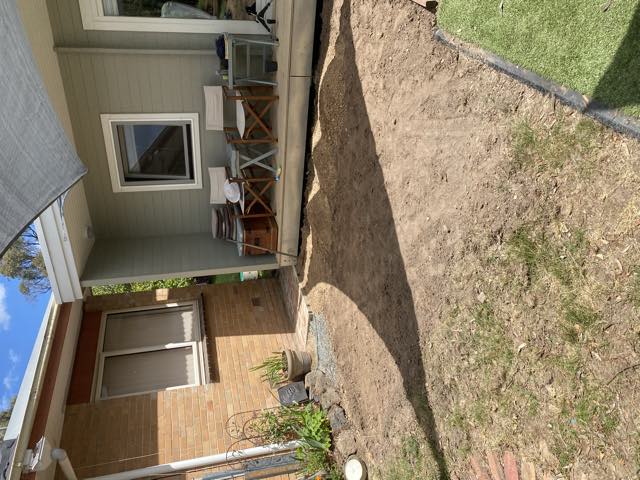
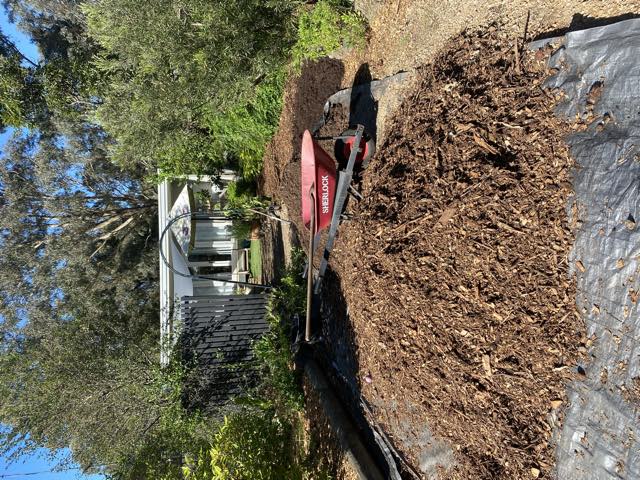
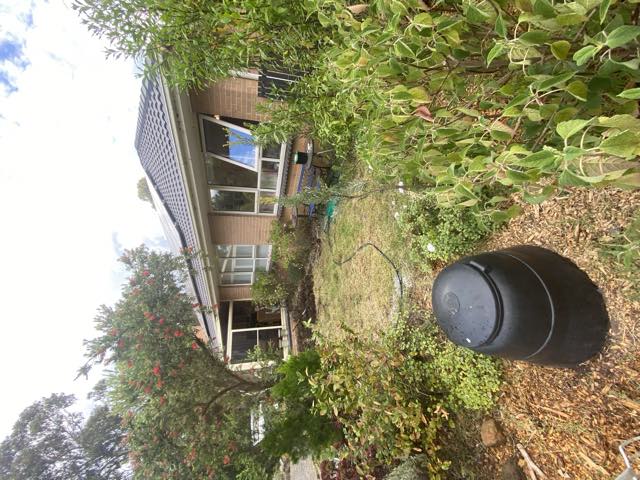
21 Dec 2023 · 14:05Day one. The mulch pile, before any of it was moved.21 Dec 2023 · 15:29Bare ground beside the studio, before the beds went in.10 Jan 2024 · 09:28A fresh heap tipped out on the tarp, barrow ready.
The fruit trees, 16 January 2024
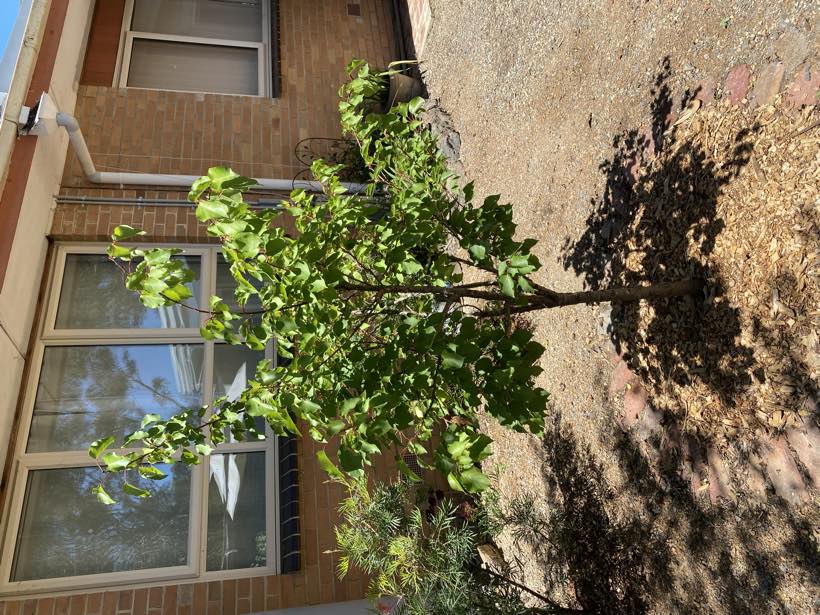
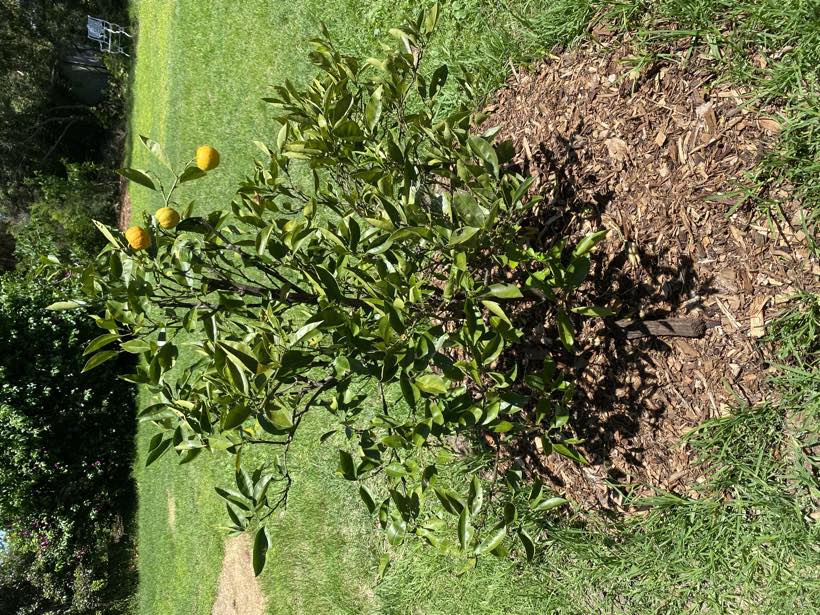
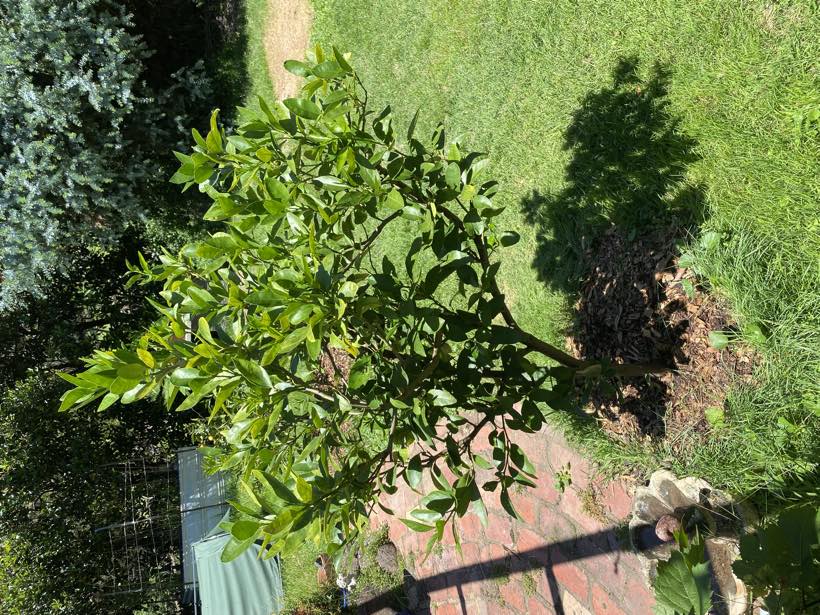
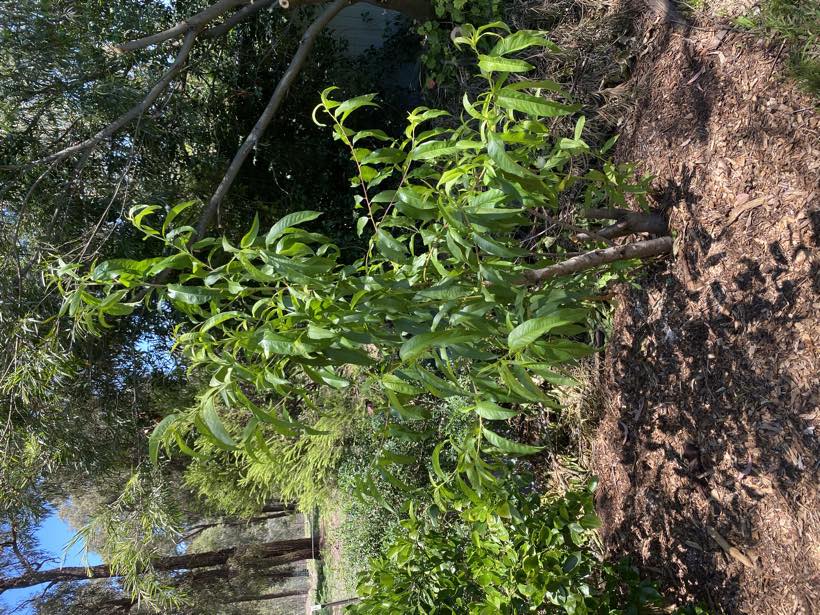
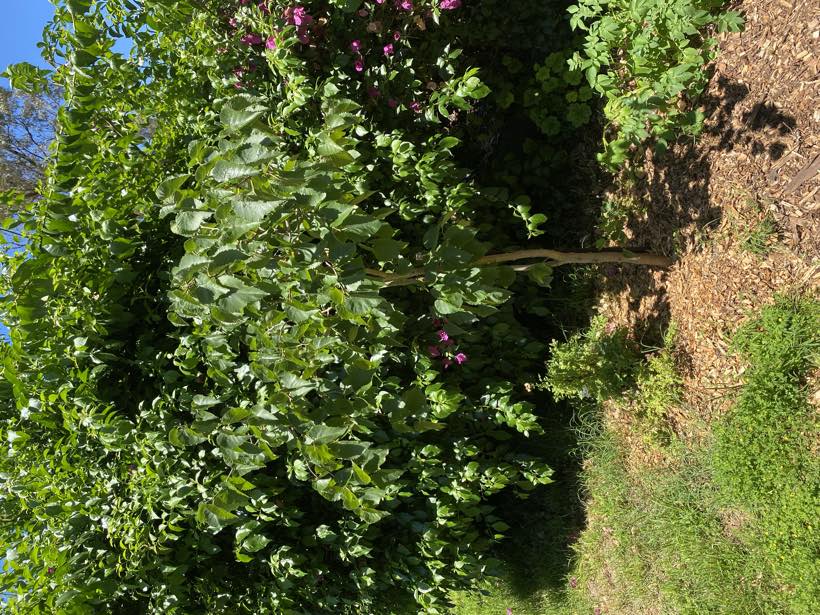
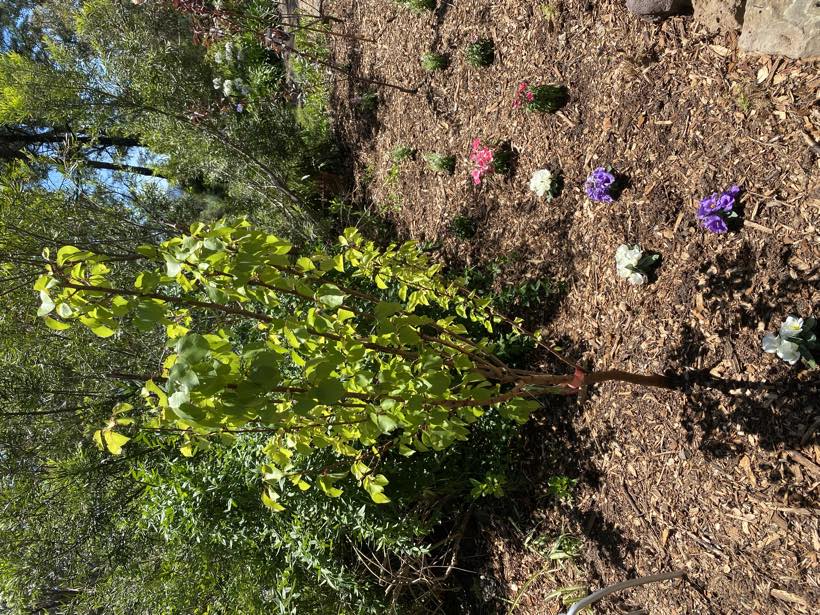
ApricotPrunus armeniaca, mulched out in the bed against the house.OrangeCitrus × sinensis, mulched to the dripline and already carrying fruit.LimeCitrus spp., mulched out beside the rock edge.NectarinePrunus persica var. nucipersica, mulched well past the drip line.MulberryMorus spp., broad-leaved and coming away well.PlumPrunus spp., underplanted with flowering annuals.
One bed, through to finished
20 Feb 2024 · 18:43Beds closing over, compost bin in, bottlebrush out.21 Feb 2024 · 09:25The new bed dug and rock-edged, six days before I left.FinishedThe same ground: gravel path laid, beds mulched and planted either side.
What happens next
Replenish mulch as it breaks down into the soil.
Watch how the newly planted fruit trees establish.
Beginnings
Learning to grow food
Through the autumn and winter of 2021, during that strange chapter when supermarket shelves exposed how fragile our food systems really are, I began learning how to grow food in my grandmother's garden at Hurstbridge. This is the beginning of everything that became the Food Forest Journey.
I started developing the early food forest with the limited horticultural knowledge I had at the time. The work was exploratory and practical: learning directly through observation, planting, and caring for the garden as it developed.
The garden and my understanding have both moved a long way since. What this period established was the approach rather than the knowledge. Hurstbridge is the first place where I began to understand a garden as a connected living system rather than a collection of individual plants.