Food Forest Journey

The journal

Parramatta, NSWfirst planting, October 2026

Parramatta Backyard Food Forest

Three days in a small western Sydney backyard. Proof that the limiting factor is rarely space.

Tidied banana clump and freshly mulched bed at the Parramatta backyard

A suburban backyard in western Sydney. The banana clump has been tidied and the bed planted out with turmeric, with the cut material left down as mulch. A raised bed alongside has been cleared and replanted with herbs.

2 entries, in order, oldest first.

Working visit

Thinning the bananas, planting the turmeric

Three days focused on getting more productive use out of a small suburban backyard and preparing an underused corner for a compact food forest.

The yard has limited space, but the existing banana clump (Musa spp.) gives useful structure and biomass. The area at the back-left has real potential as a small layered food forest — groundcovers, shrubs and carefully chosen small fruit trees.

I thinned and tidied the banana clump, then processed the removed foliage and stems and laid them around the planting area as mulch. That opened the space, returned organic matter to the soil and prepared the ground for more planting.
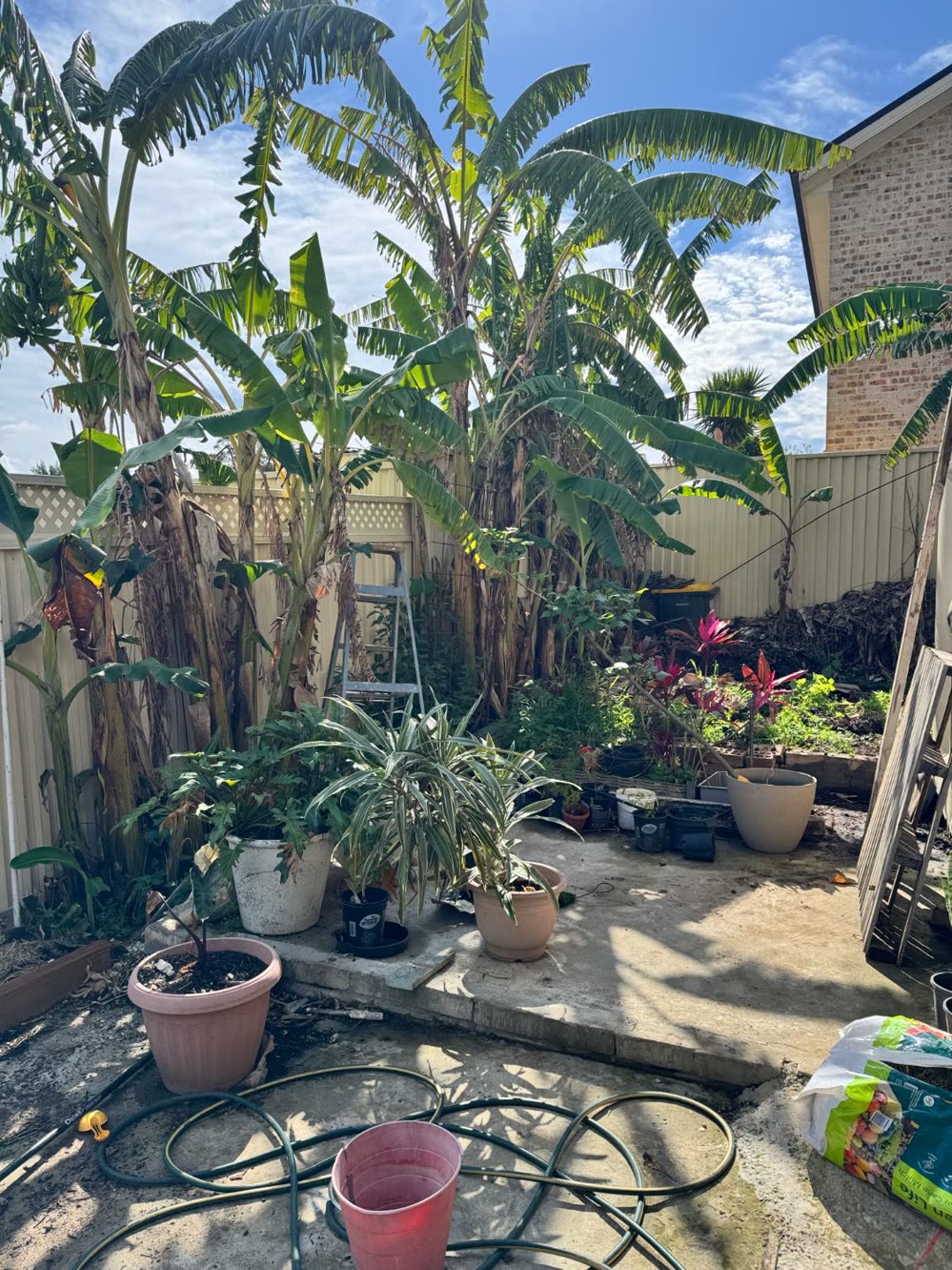
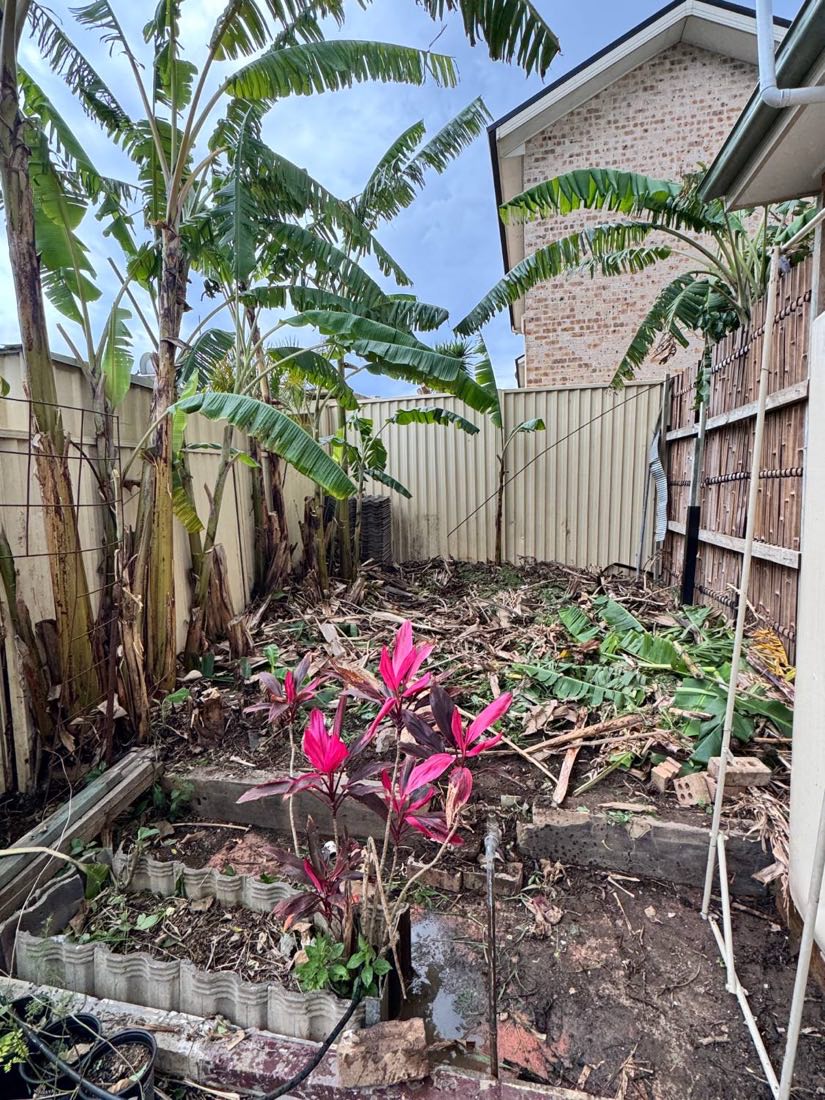
The banana clump, before and after
An overgrown banana clump in a small suburban backyard, dead leaves hanging, pots and a ladder stacked around it
BeforeThe corner closed in: spent stems, dead leaf still hanging, and the ground underneath doing nothing.
The same corner thinned and opened up, cut banana stems and leaves spread as mulch over the bare ground
AfterThinned out, with everything taken off the clump chopped and laid back down around the planting area.

Turmeric (Curcuma longa) rhizomes went in throughout the garden, including beneath and around the bananas.

A shared raised bed nearby was also prepared and planted out with flowers.

Flower bed

A flower bed for a childcare centre

The same trip south, a different job. A childcare centre wanted the raised bed at the front of the building planted out — a three-tiered timber box in a paved courtyard, bare but for old mulch.

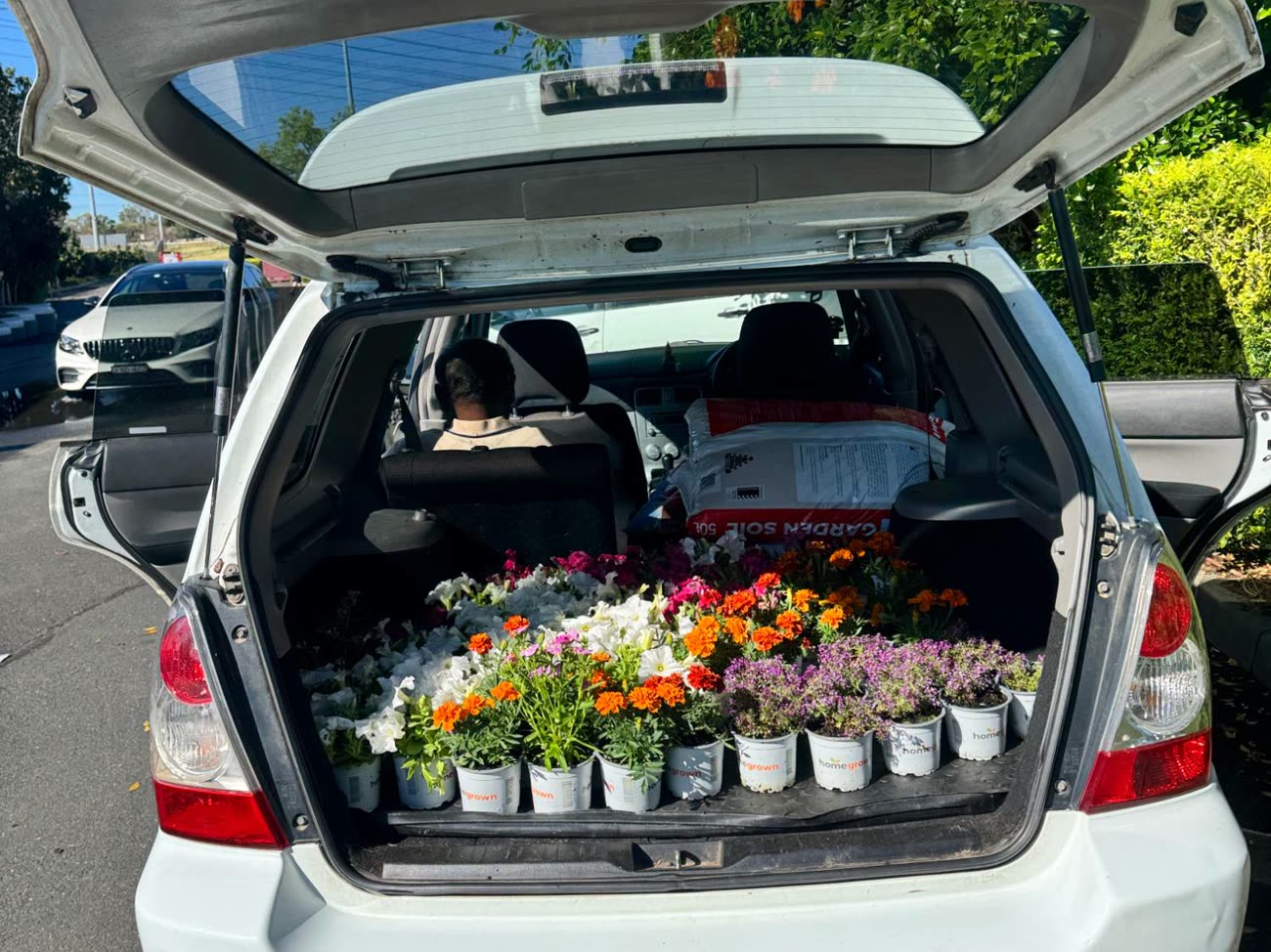
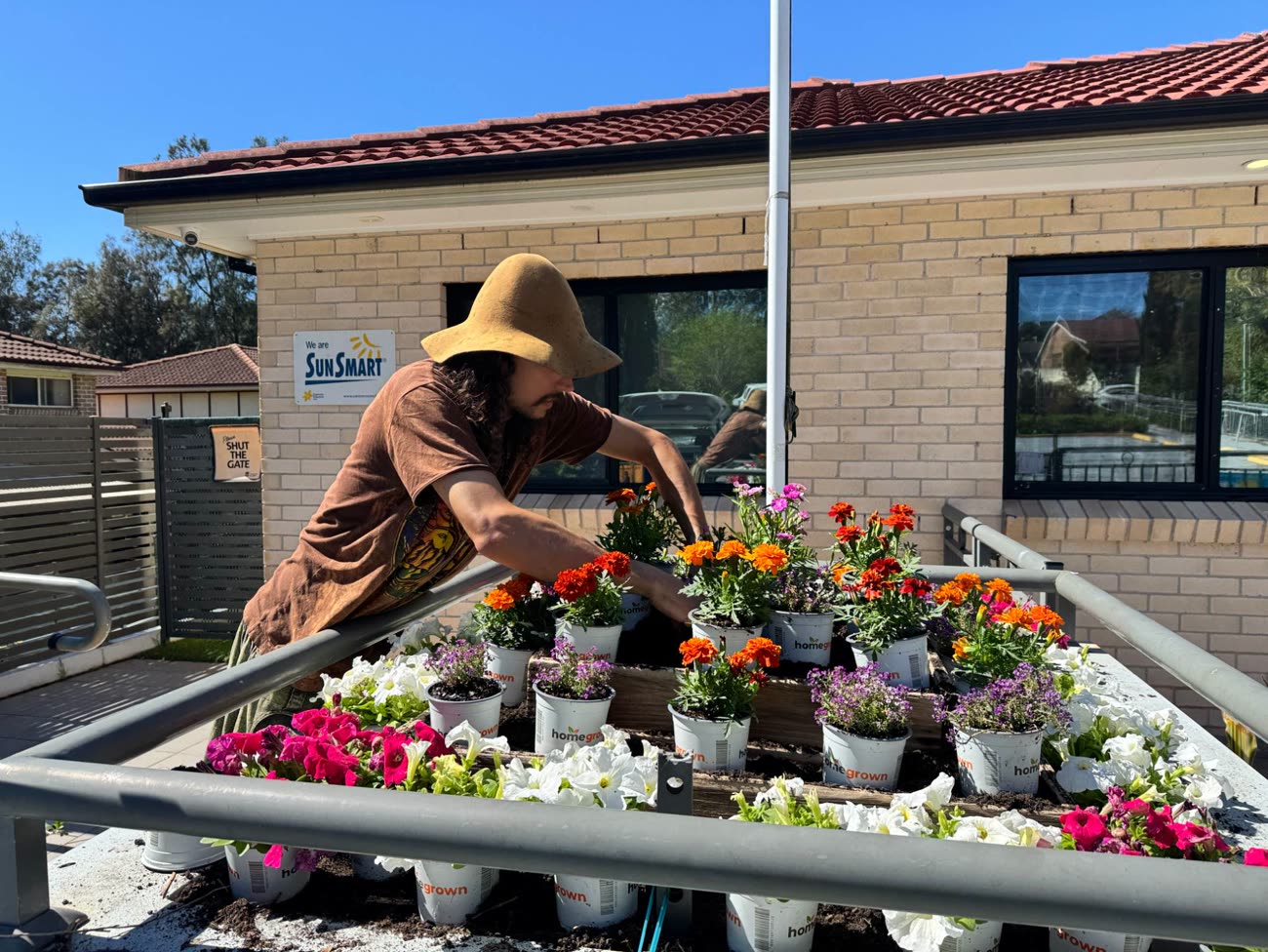
A boot full of punnets: marigolds (Tagetes spp.), petunias (Petunia spp.) and alyssum (Lobularia maritima). They went out on the bed tier by tier first, so the colour could be read as a whole before anything was committed to the ground, then planted and mulched.

Not a food forest and not pretending to be one. But it is colour at the height of a small child, it brings bees to a spot where they can be watched safely, and it turns a bare box in a concrete courtyard into the first thing anyone sees on the way in.

A day on the front bed
The open boot of a station wagon filled with punnets of marigolds, petunias and alyssum
Picked upThe whole bed in the back of the car.
A person in a wide-brimmed hat arranging potted flowers across a tiered raised garden bed
Laid outEverything set out on the bed first, so the colour could be read before anything went in.
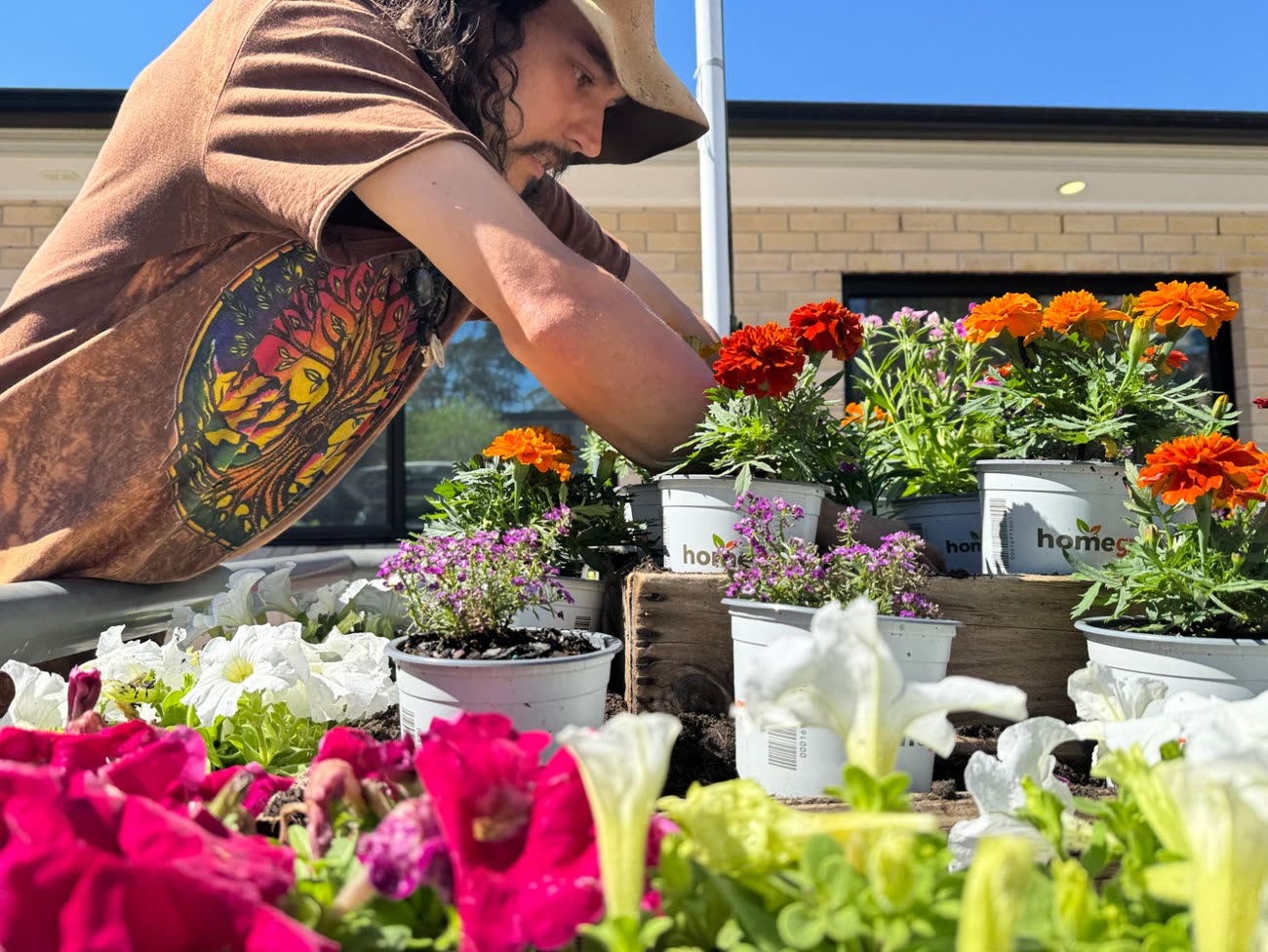
Close view of hands setting marigold and alyssum seedlings among potted petunias
PlantingMarigolds and alyssum going in along the top tier.
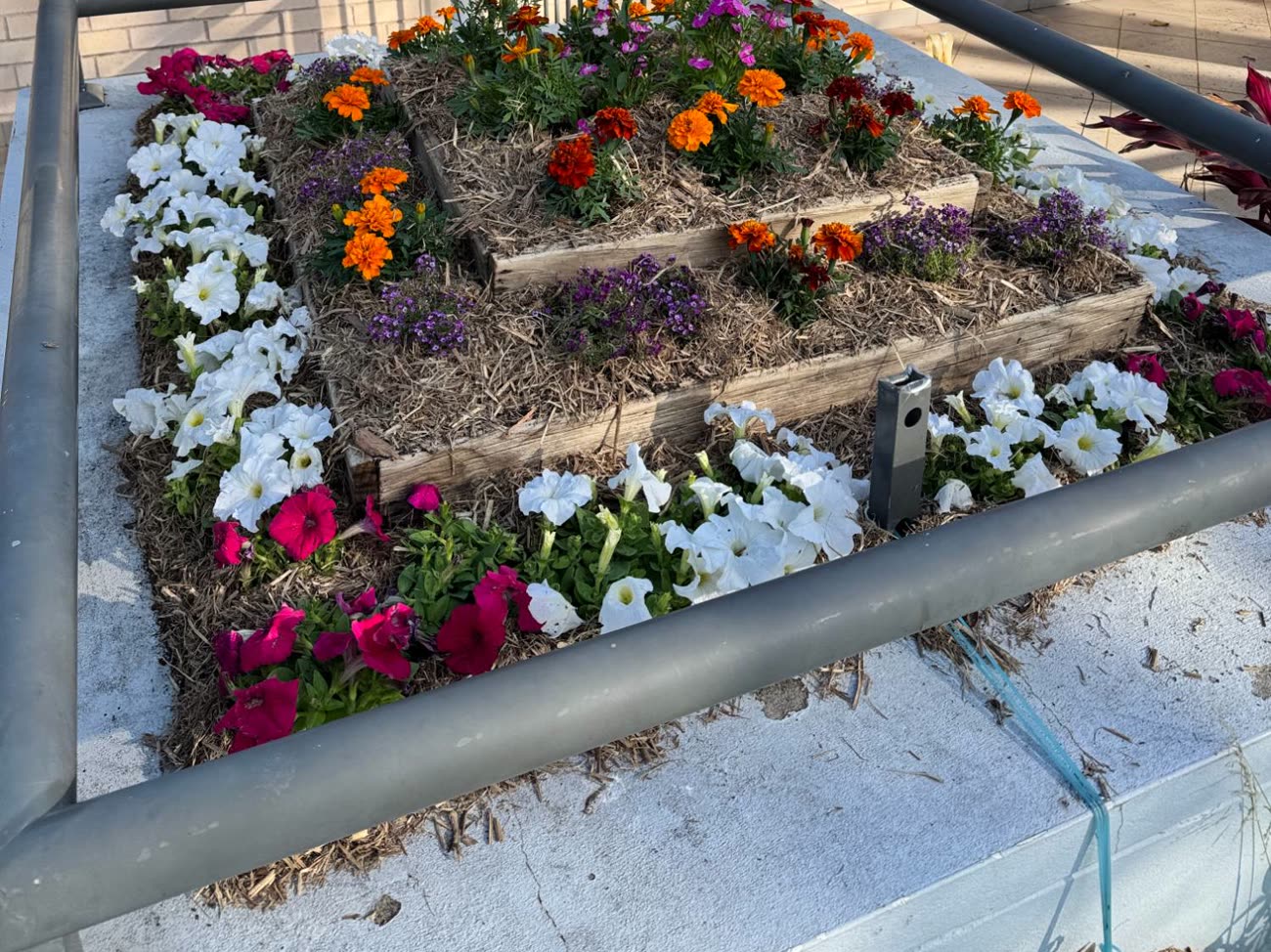
A finished three-tiered flower bed planted with white and magenta petunias, orange marigolds and purple alyssum
FinishedThree tiers planted and mulched, white through the outside, hot colour up the middle.