
Bananas in the ground, lotus in the dehydrator
I am still on the property as I write this, so this entry is open and will be completed when the stay ends.
On arrival I got the banana planting material into the ground. The smaller pups were potted up for establishment and later planting, and the larger rhizome sections went straight in — Sugar banana (Musa acuminata × M. balbisiana, cultivar ‘Sugar’) and plantain (Musa acuminata × M. balbisiana).
I walked the entire property boundary to build up a picture of its vegetation, access, forest edges and creek environment. Rose-leaf bramble (Rubus rosifolius) was carrying abundant fruit. Spear-leaf swamp mallow (Pavonia hastata) was present in numbers in the natural forest beside the creek. Molucca bramble (Rubus moluccanus) had relatively little fruit, though I found and tasted one.
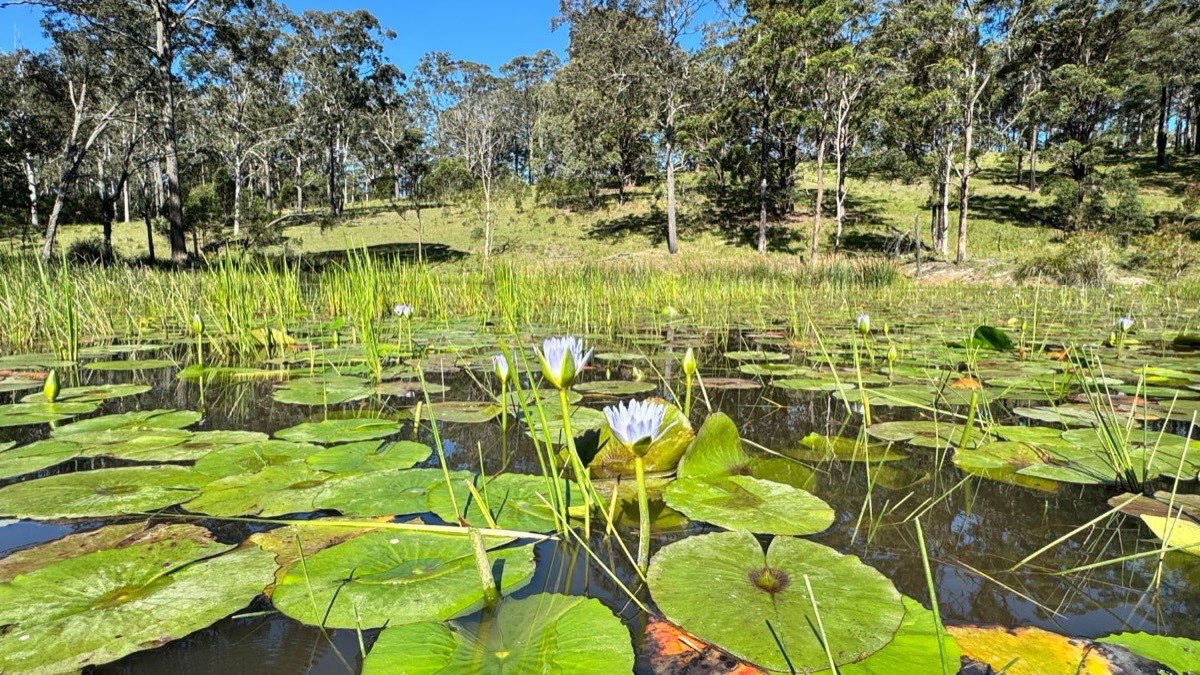
On 6 October I did a small harvest of blue lotus flowers (Nymphaea caerulea) and dehydrated them, then returned on the 9th for a substantially larger harvest and dehydrated that as well.
On 12 October a good deal of tree work was completed and the cut material was processed into three large piles of fresh woodchip — an important resource for soil protection and establishment.
On 13 October I propagated pigeon pea (Cajanus cajan) seed: ten into a propagation tray, two dozen more sown directly. All four comfrey (Symphytum officinale) rhizomes went straight into the soil, and seven elderflower (Sambucus nigra) cuttings were dipped in honey and planted across three pots. We also set up an electric fence around the chicken tractor in the paddock near the lotus dam.
What happens next
- Decide where the three woodchip piles will do the most soil-building good before spreading them.
- Monitor the potted banana pups and the directly planted rhizomes through establishment.
- Watch germination on the ten tray-sown and twenty-four direct-sown pigeon peas.
- Confirm the botanical identity of the plants observed along the boundary and creek.