Wangan and Jagalingou Country, Central QLDfirst planting, September 2025
Waddananggu
Semi-arid country that can go half a year without rain, and the hardest ground I work on. I came the first time to fire and the second time to floodwater. I am here to help put in food that will keep feeding people on their own Country, and I have learned more from this one than from any garden I have been paid to build.
Wangan and Jagalingou Country in Central Queensland, where the Carmichael coal mine has no permission to be. A food forest going in alongside the Traditional Custodians, so that the people holding ceremony here can feed themselves from their own Country.
Where this is
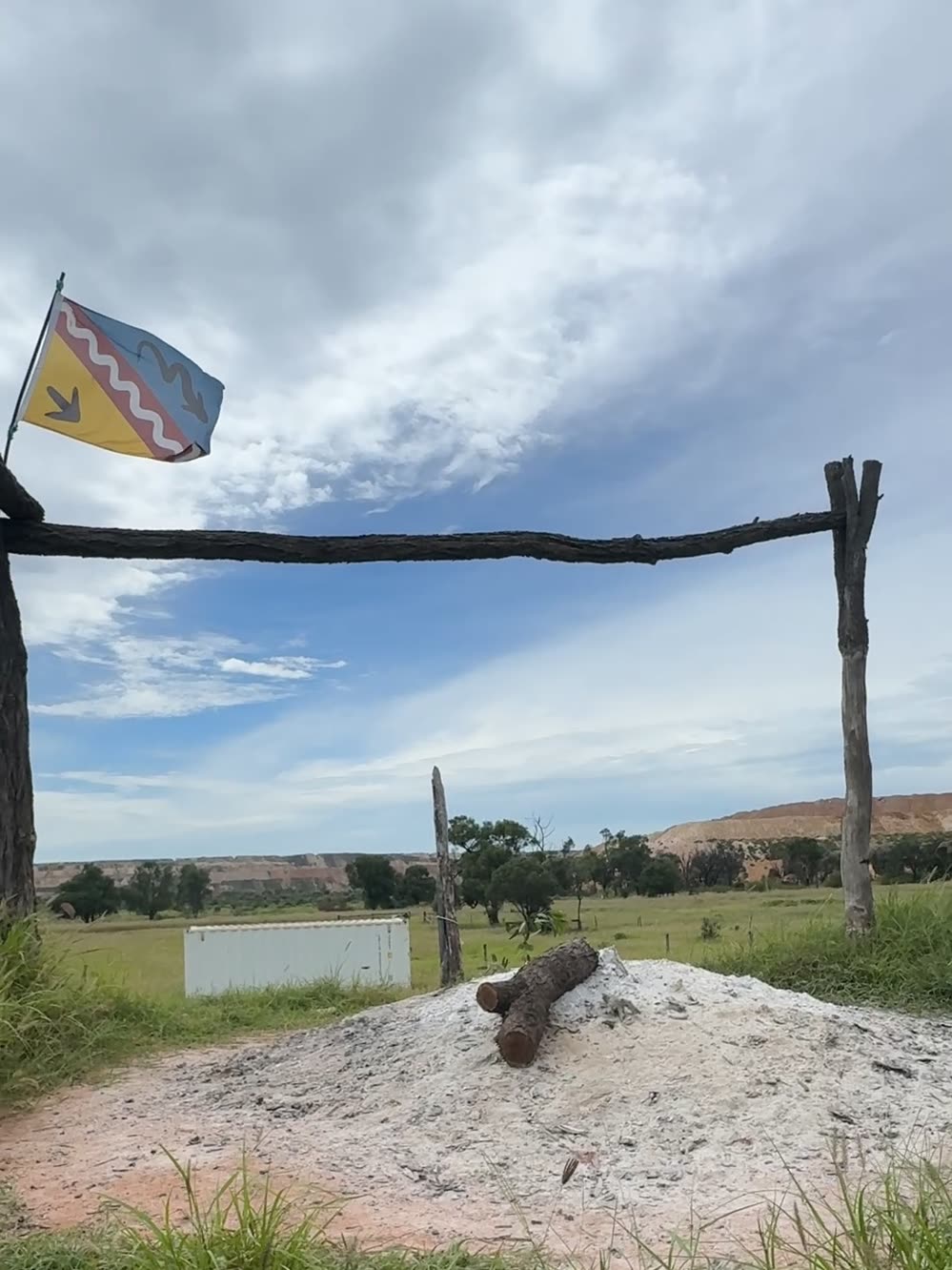
Where it standsThe Adani Carmichael mine has no permission to be on this land. Helping grow food here, alongside the people who belong to this Country, is what I am most grateful for.CountryThe sacred fire under the flag, with the mine’s workings on the horizon behind it. It looks out, but the ash is protecting hot coals underneath. This fire is still going.
2 entries, in order, oldest first.
First installation
Cultural Burning and Then Food Forest Later
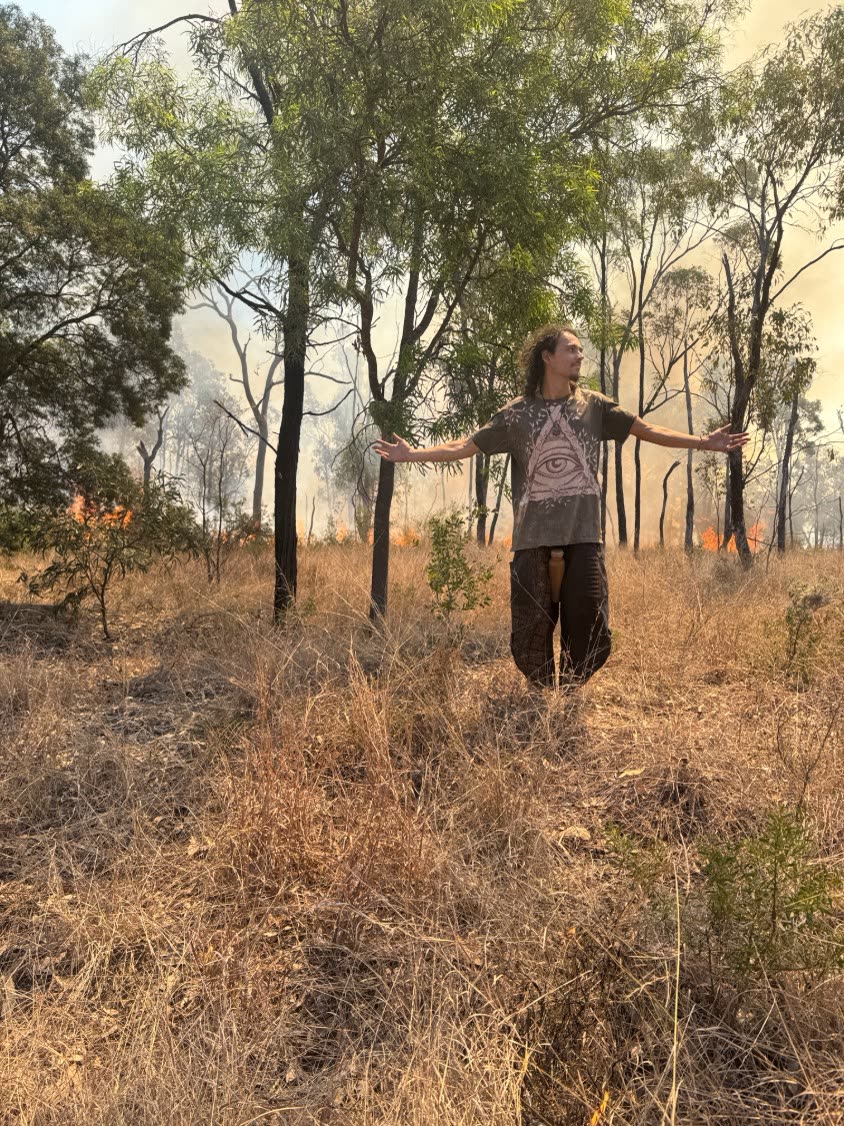
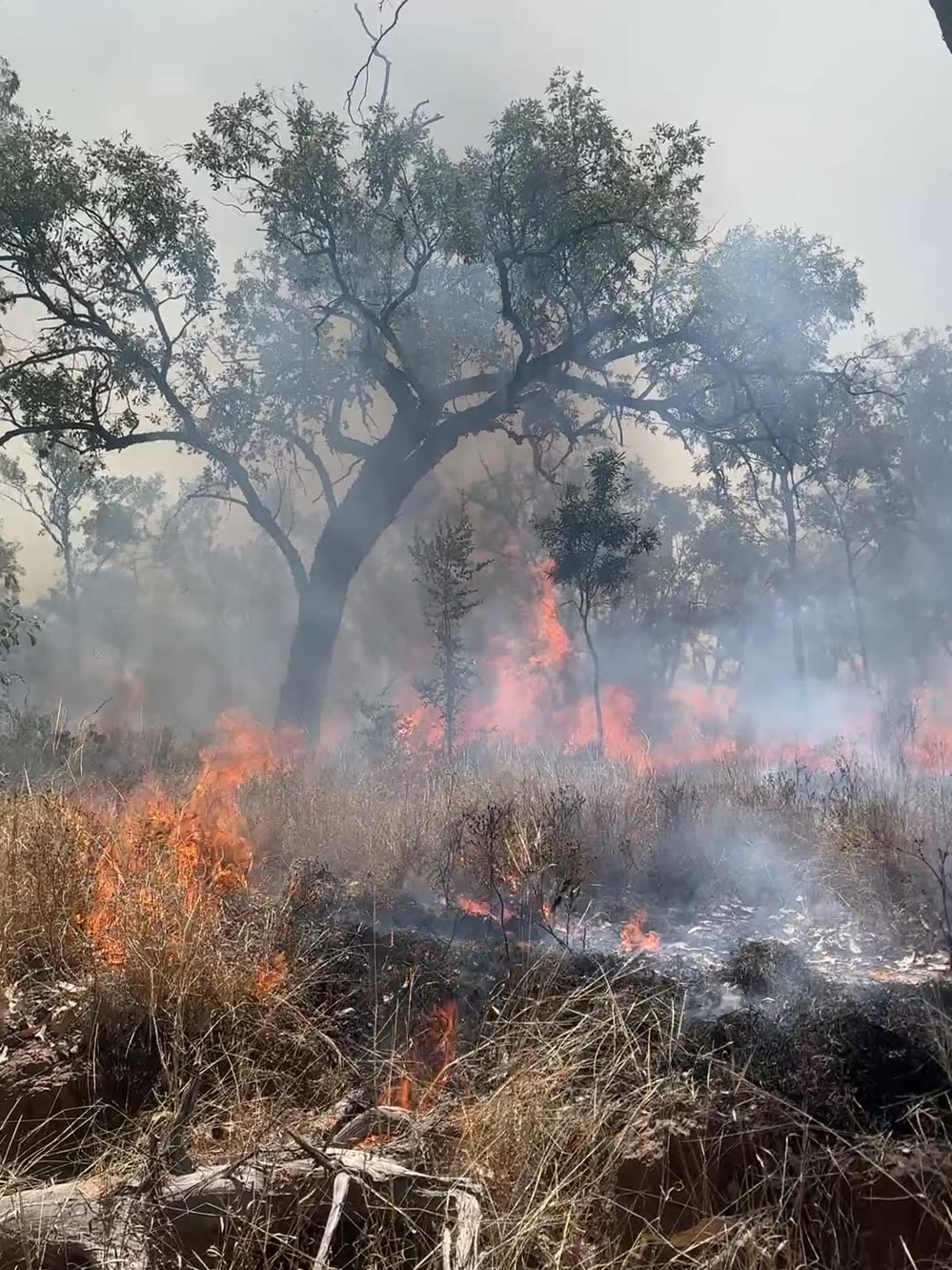
The week opened with cultural burning: a low, slow fire lit at the right time of year, which takes the dry grass down without cooking the soil or the trees. Country that looks finished is green again within weeks. The people here have been doing it on this country for a very long time.
Then to what I had come for, which is helping put food in the ground. Not a demonstration garden — food that keeps feeding people on their own Country, where the nearest shop is hours away.
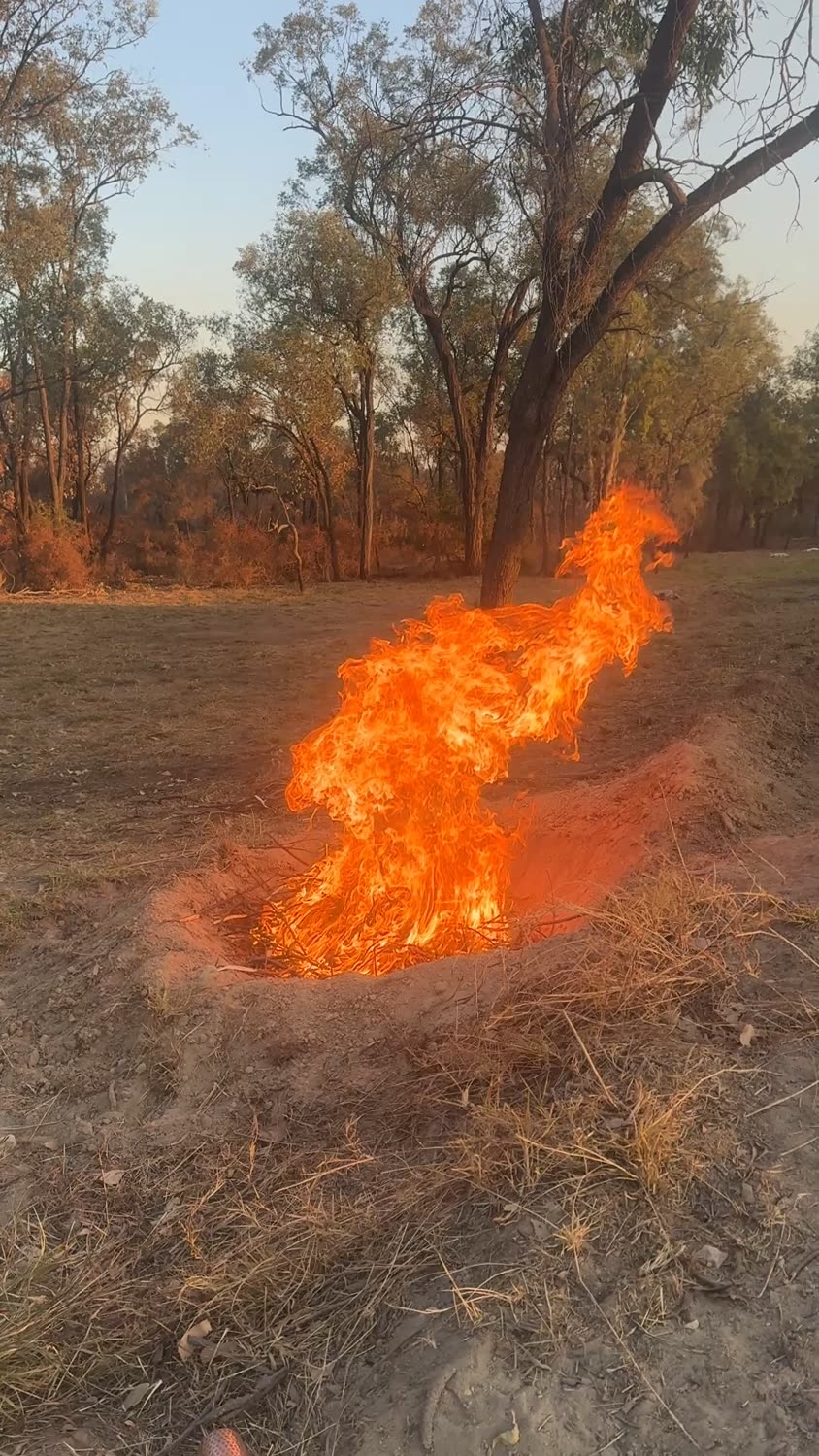
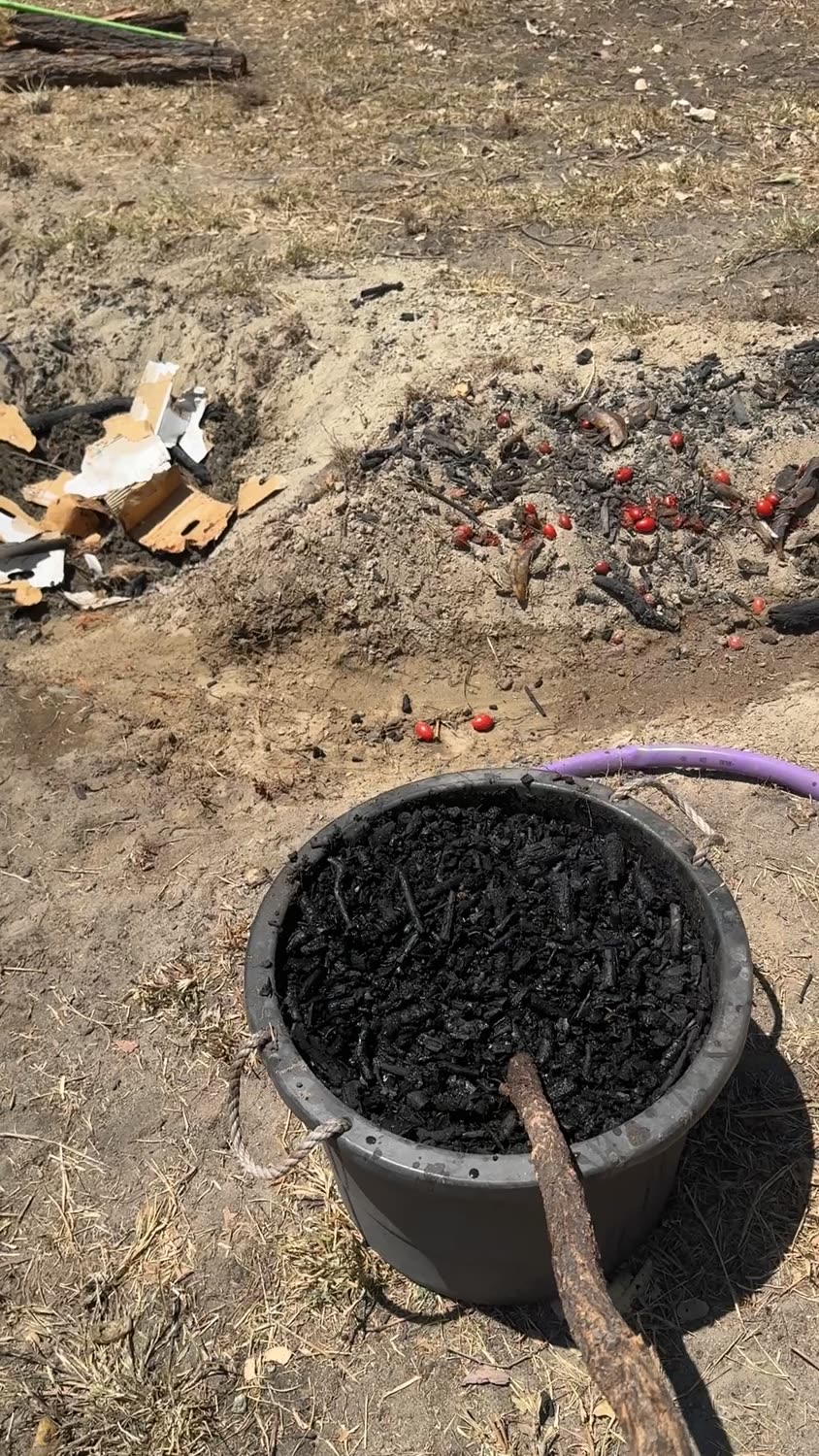
Papaya (Carica papaya) seed went out through the garden. I dug a pit and made about sixty litres of char in it, quenched it, then loaded it with whatever nitrogen and mineral nutrient was on hand. Raw char spends its first season stripping nutrient out of the soil to fill its own pores, so it wants feeding before it goes near a root. A fruit tree went into the pit the char came from, so the planting hole was the kiln.
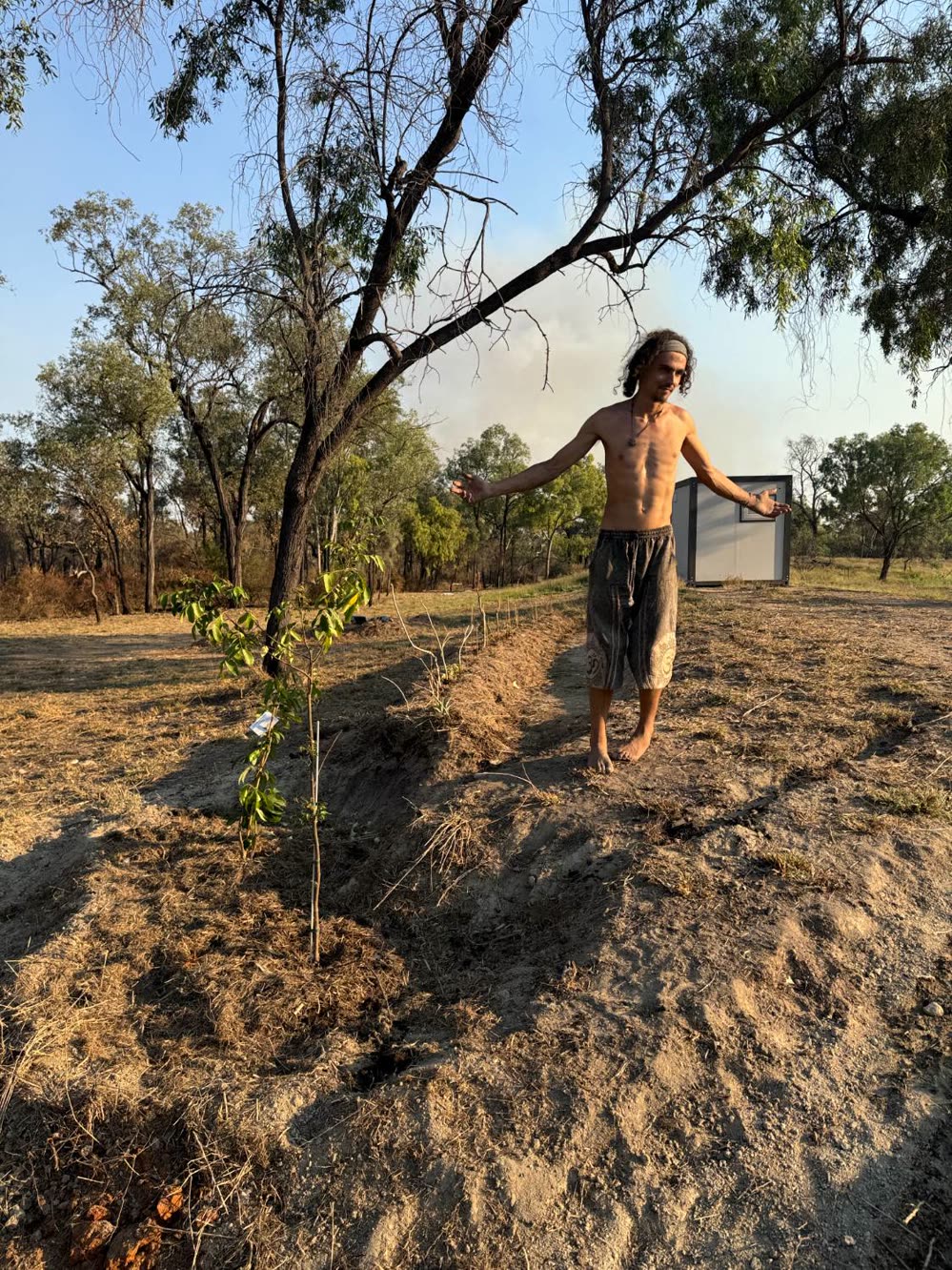
I dug swales to catch the greywater off the shower, mulched them with what was lying about, and planted cassava (Manihot esculenta) cuttings and pigeon pea (Cajanus cajan) into them.
There is no nursery up the road and no load of mulch to order in, so everything is built from what is already on the ground. That is the point: a system the people living with it can feed, mulch and extend long after any visitor has driven home.
A cool burn, and what goes in behind it
The burnLow and patchy through the grass, nowhere near the canopy.PlantedA young fruit tree in on the swale line, smoke still up behind it.
The biochar pit
Burning downThe pit going at dusk. Burning in a pit rather than a heap keeps the air off the coals from underneath, so the wood chars instead of turning to ash.QuenchedQuenched and lifted out, ready to be loaded with nutrient.
How the grass goes back into the ground
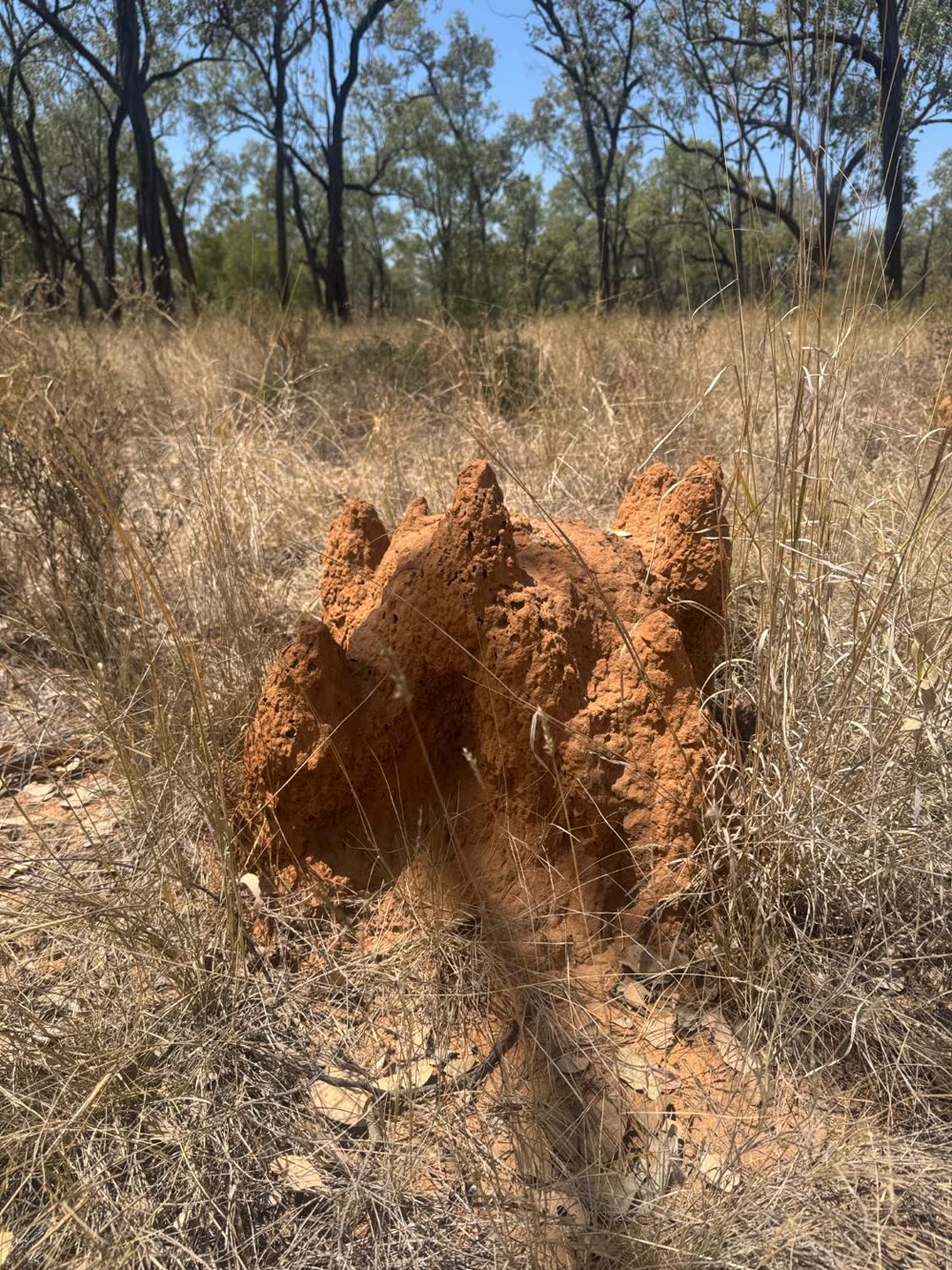
The countryA termite mound out in the dry grass. These are the soil engineers here: organic matter goes down their galleries and comes back up as structure, which is the one job you cannot do for a site this size yourself.The fireLow through the grass with the canopy untouched above it, and the ground already black behind the flame front.
Return visit
Arrived in Floods, Fenced the Garden
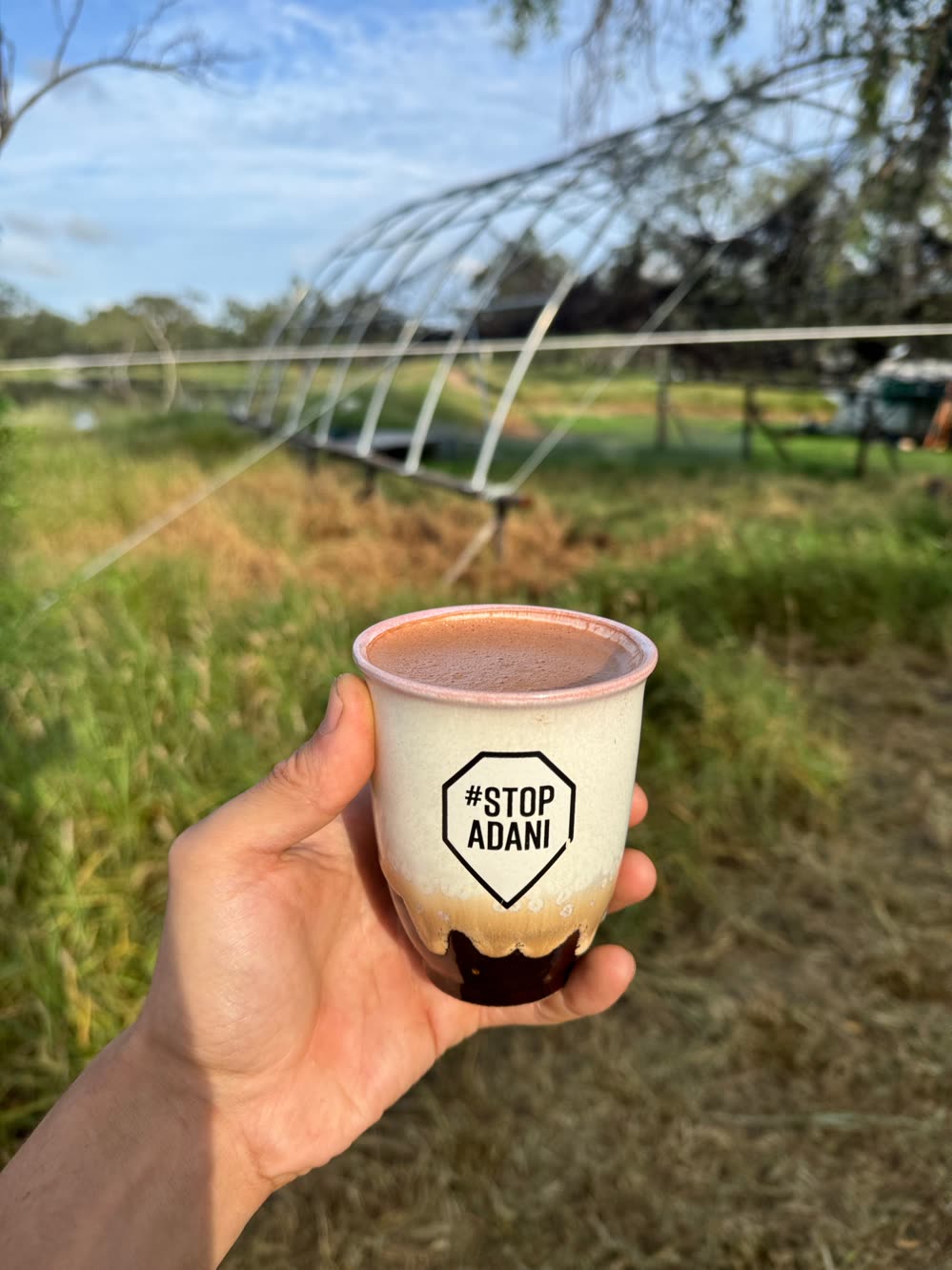
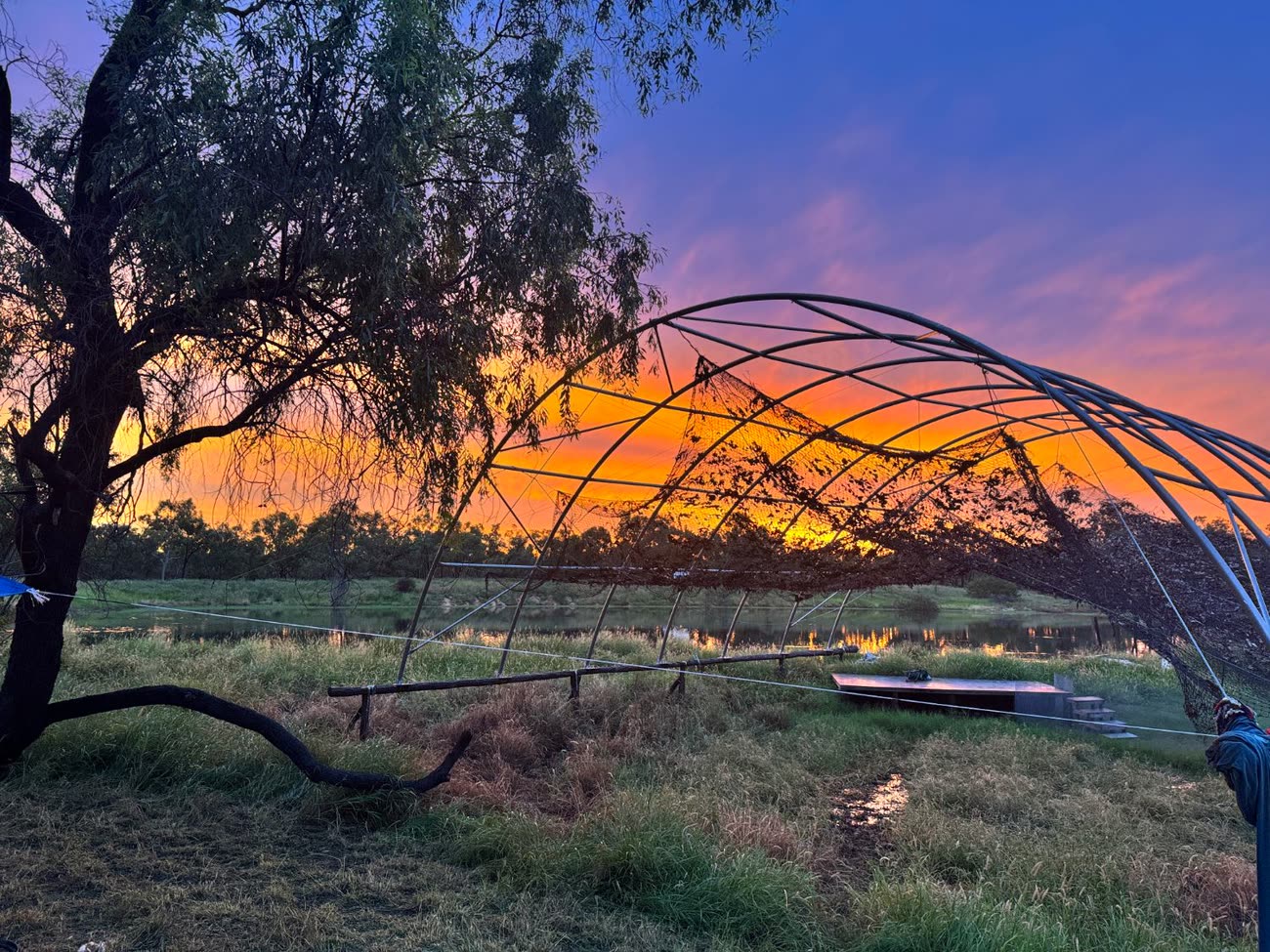
January 2026Sunset over the dam, the shade house frame still standing and the country green after the water.
The first visit came with fire. This one came with water: the country was in flood when I arrived, and I got to watch where it ran, where it pooled and where it soaked away. You can read contours off a map, but watching the water move is what tells you where a swale or a planting actually belongs.
A week on site was long enough to read what the first installation had done and to put more in behind it.
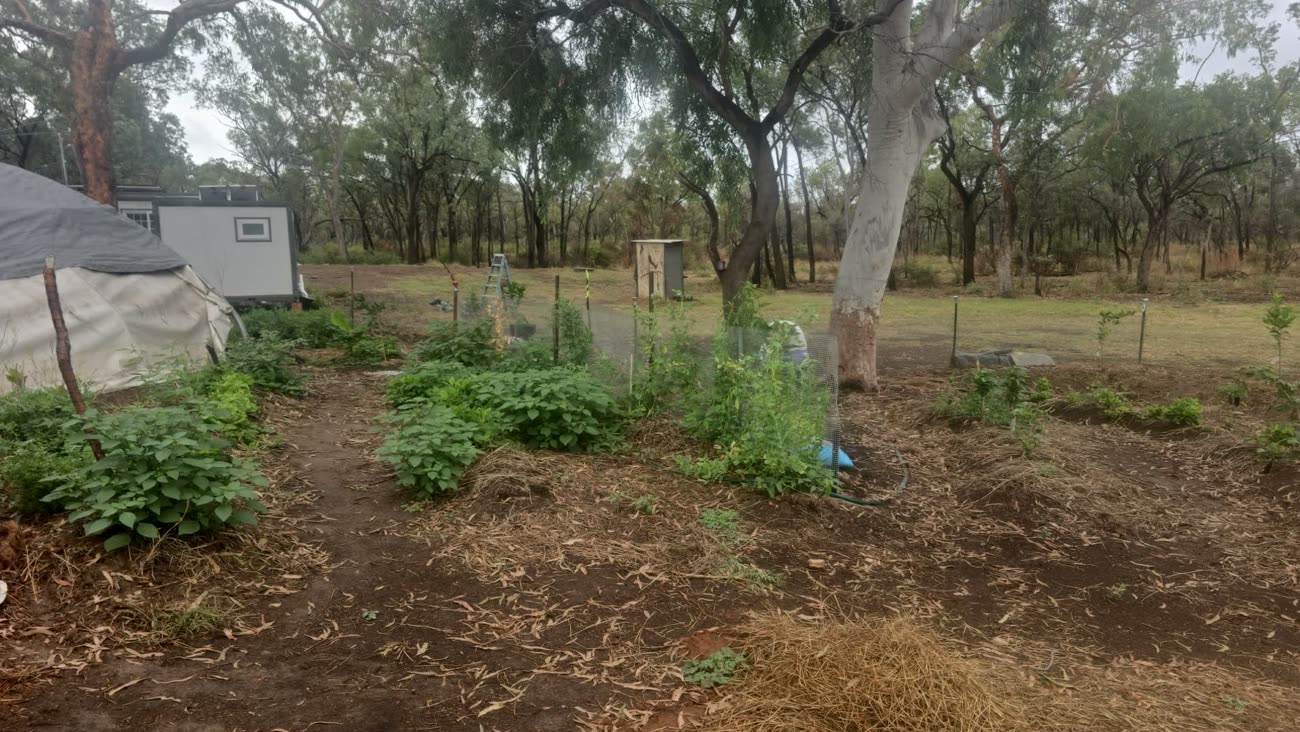
The pigeon pea (Cajanus cajan) had grown strongly. The sweet potato (Ipomoea batatas) was establishing and the cassava (Manihot esculenta) was still going. For a first season on semi-arid ground with no reliable rain, that is a good report.
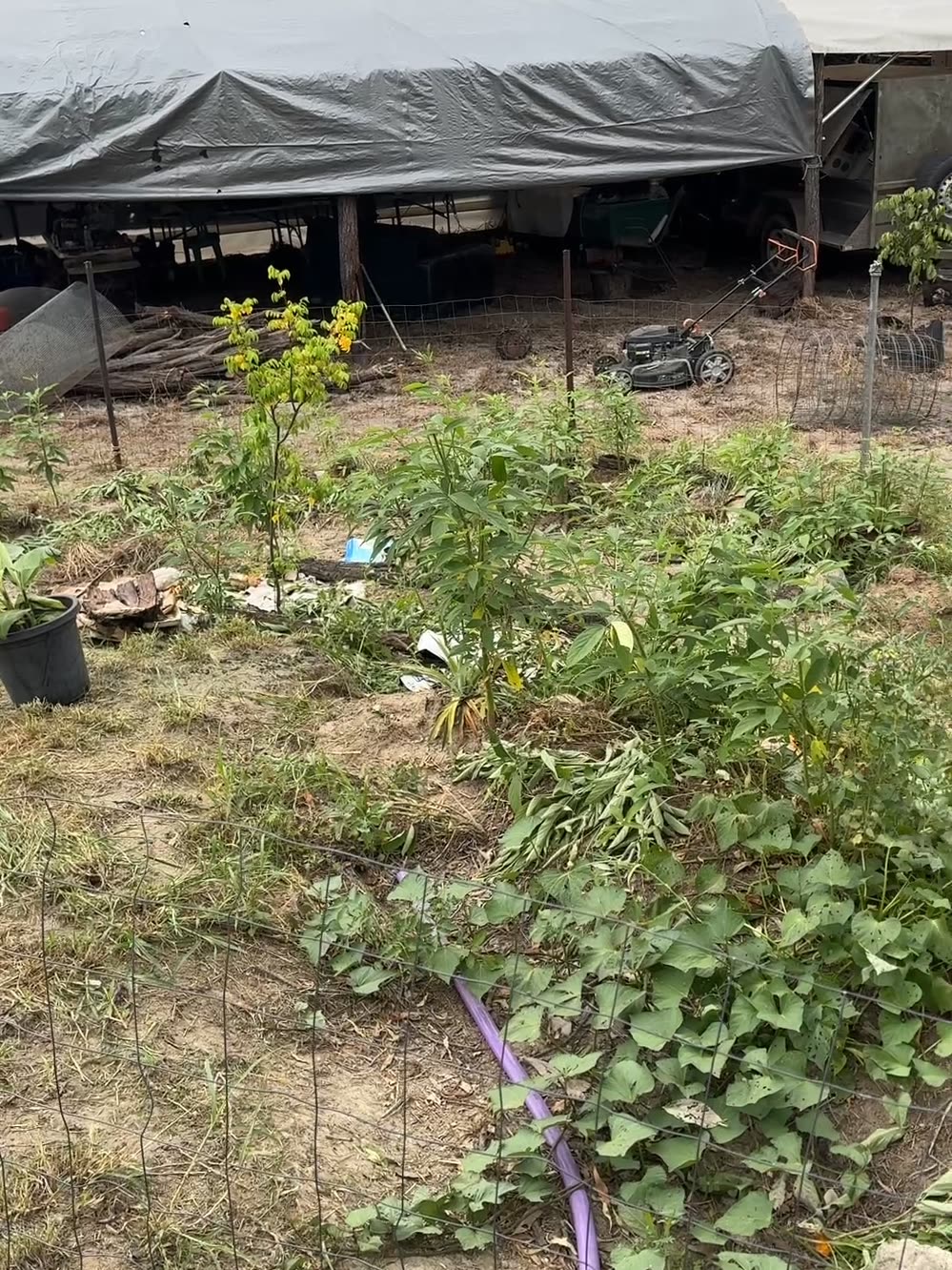
I cut the pigeon pea back hard and dropped the prunings where they fell, made more mulch with the mower and spread it through. A fence went in around the whole garden, because the dogs were digging through the beds faster than anything could establish, and a fence is the difference between a garden that feeds people and one that keeps starting over.
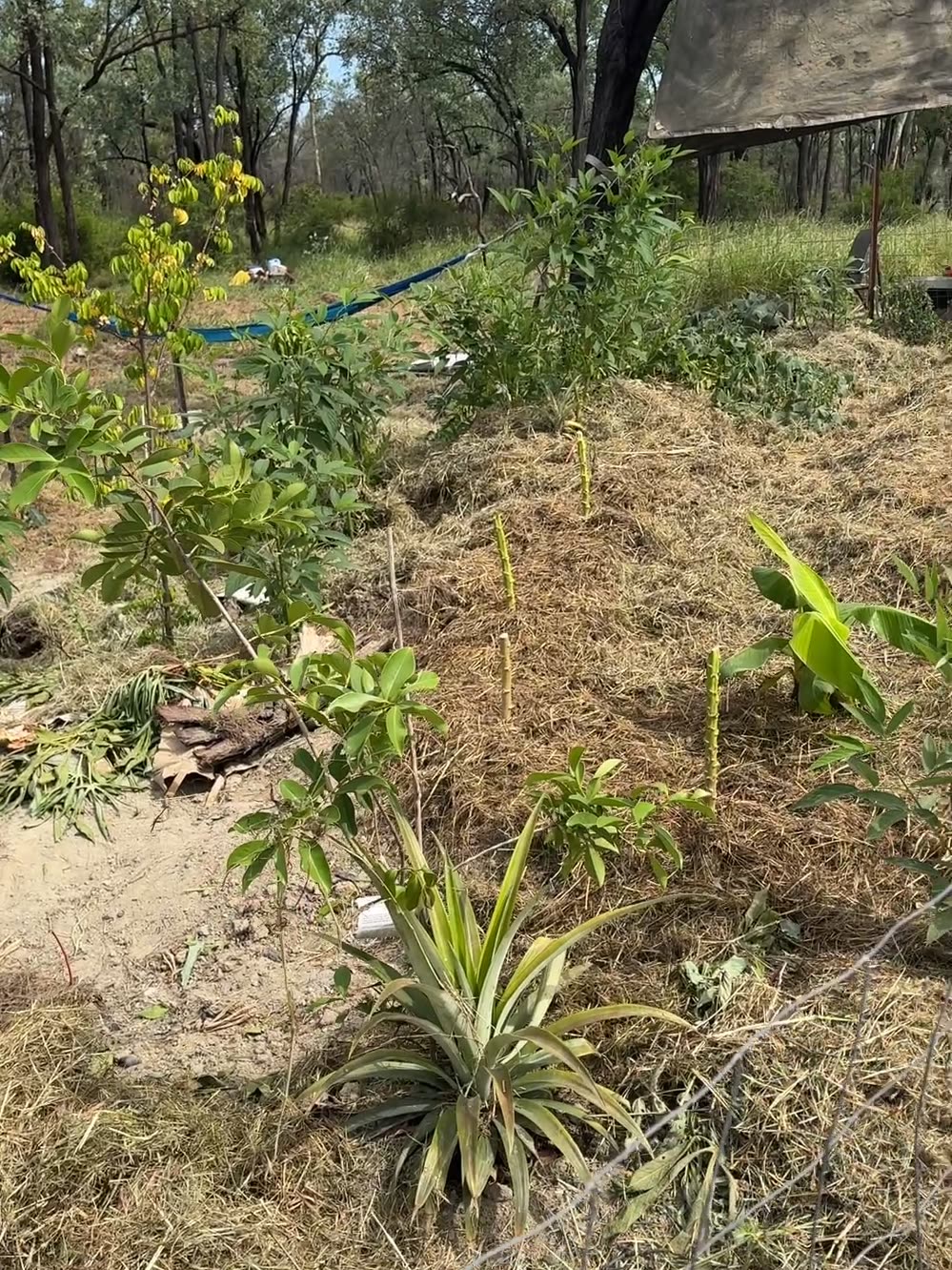
Then I widened it and planted into the new ground: more fruit trees, with sugar banana and red Dacca banana (Musa spp.), pineapple (Ananas comosus), a Medjool date palm (Phoenix dactylifera) raised from seed, dragon fruit (Selenicereus spp.) and grapevine (Vitis vinifera).
Every one of those is chosen to keep producing with very little asked of it, because the measure of this garden is not how it looks on the day I leave. It is whether it is still feeding people here in five years, run by the people who live with it.
Widened and mulched
FencedSweet potato run right across the ground, the pigeon pea cut back and dropped where it fell, and the mower that made the rest of the mulch.The gardenCut grass laid thick over the beds, with pineapple, banana and young fruit trees coming up through it.
What happens next
Get the area, the layout and the fruit-tree species properly recorded, so the garden has a record its custodians can work from.
Burn the local hardwood into dense, high-temperature char and build the soil into an oasis around the big dam. That char is also how I intend to offset the travel: the round trip out here is about 1,860 km each way.
See what came through the drought. The site had its first good rain in six months in October 2026.